W3webschool Blog

Digital Marketing Course Eligibility (2026): Who Can Join, Qualification, Age Limit & Career Scope

Choosing the right career starts with understanding whether you're eligible to pursue it. If you're wondering who can join a digital marketing course, what qualifications are required or whether there's any age limit, you're not alone. These are some of the most common questions students, graduates and working professionals ask before taking admission.

The good news is that digital marketing is a skill-based field that welcomes learners from different educational and professional backgrounds. Whether you've completed Class 12, graduated from college, want to switch careers or plan to grow your own business, you can start learning digital marketing without a technical background or coding knowledge.

This guide explains everything you need to know about digital marketing course eligibility, including the minimum qualification, age requirements, who can apply, essential skills and career opportunities. By the end, you'll have a clear understanding of whether this career path matches your goals and what to look for before enrolling in a course.

Key Takeaways
  • Understand the eligibility criteria for a digital marketing course.
  • Find out who can join after 12th, graduation or while working.
  • Learn about the minimum qualification and age requirements.
  • Know whether coding or technical knowledge is necessary.
  • Explore career opportunities and the skills needed to get started.

Before You Read (60-Second Overview)

If you're planning to join a digital marketing course but aren't sure whether you're eligible, this guide will answer the most common admission-related questions in one place. Whether you're a student, graduate, working professional or business owner, you'll understand the basic eligibility requirements before making your decision.

Best For & Suitable For
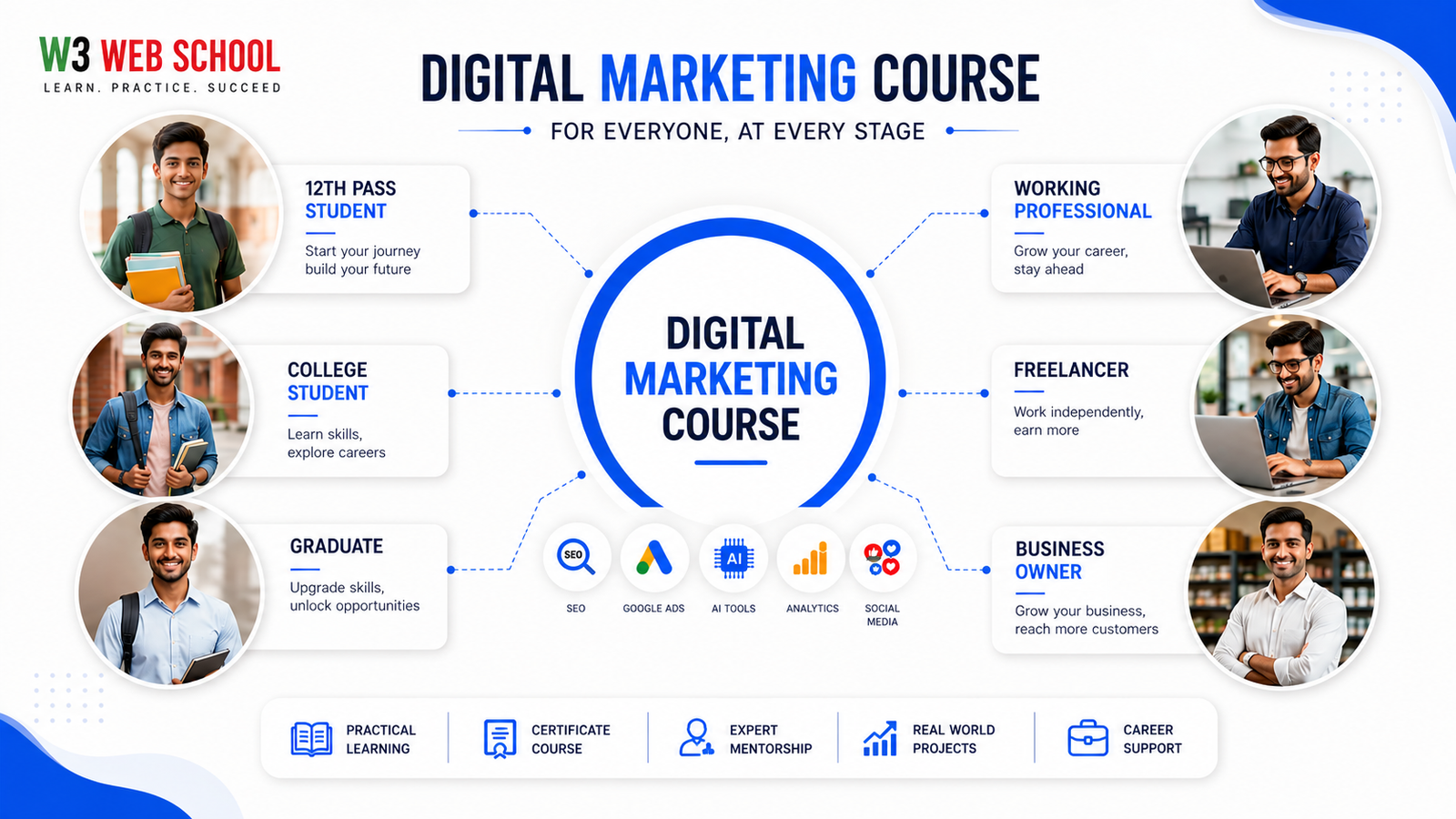
Students exploring career options 12th Pass Students Career Switchers Graduates Business Owners & Freelancers Working Professionals
Reading Time
10–12 Minutes
Last Updated
2026
What You'll Learn
  • Who is eligible to join a digital marketing course
  • Minimum educational qualification required
  • Is there any age limit?
  • Can 10th pass and 12th pass students apply?
  • Can graduates from any stream join?
  • Is coding or technical knowledge required?
  • Essential skills for beginners
  • Career opportunities after completing the course
Why This Guide Is Different

Unlike many articles that only mention eligibility, this guide also explains who should join, what skills are actually required, common misconceptions, career opportunities and how to choose the right digital marketing course—helping you make a well-informed decision instead of relying on advertisements alone.

Who Should Read This Guide?

Digital marketing is one of the few career options that welcomes learners from different educational and professional backgrounds. Whether you're planning your first job, looking to upgrade your skills or exploring a career change, understanding the eligibility criteria can help you make a more informed decision.

This guide is designed for anyone who wants to know whether they're eligible to join a digital marketing course and what to expect before taking admission.

This Guide Is Perfect For:

12th Pass Students

If you've recently completed Class 12 and are exploring career-oriented courses, this guide will help you understand whether digital marketing is the right choice and what opportunities it offers after school.

College Students & Graduates

Want to build practical skills alongside your degree or improve your employability after graduation? This guide explains the eligibility requirements and how digital marketing can complement your academic education.

Working Professionals

If you're planning a career switch or want to upskill without leaving your current job, you'll learn whether digital marketing is suitable for your experience level and career goals.

Freelancers

Whether you're a content writer, designer, developer or independent consultant, digital marketing skills can help you attract more clients and expand your service offerings.

Business Owners & Entrepreneurs

If you want to generate more leads, improve your online presence or understand how digital marketing works, this guide will help you determine whether learning digital marketing is the right investment for your business.

Anyone Confused About Eligibility

If you're unsure about the minimum qualification, age limit, technical background or coding requirements, this guide answers the most common questions in a simple and practical way.

By the End of This Guide, You'll Know

  • Whether you're eligible to join a digital marketing course.
  • Which educational qualifications are accepted.
  • Whether age or previous work experience matters.
  • If coding or technical knowledge is required.
  • How to choose a course that matches your career goals.

Quick Note: There isn't one ideal profile for learning digital marketing. Students, graduates, professionals and entrepreneurs can all succeed in this field by developing practical skills and staying consistent with learning.

What Is the Eligibility for a Digital Marketing Course?

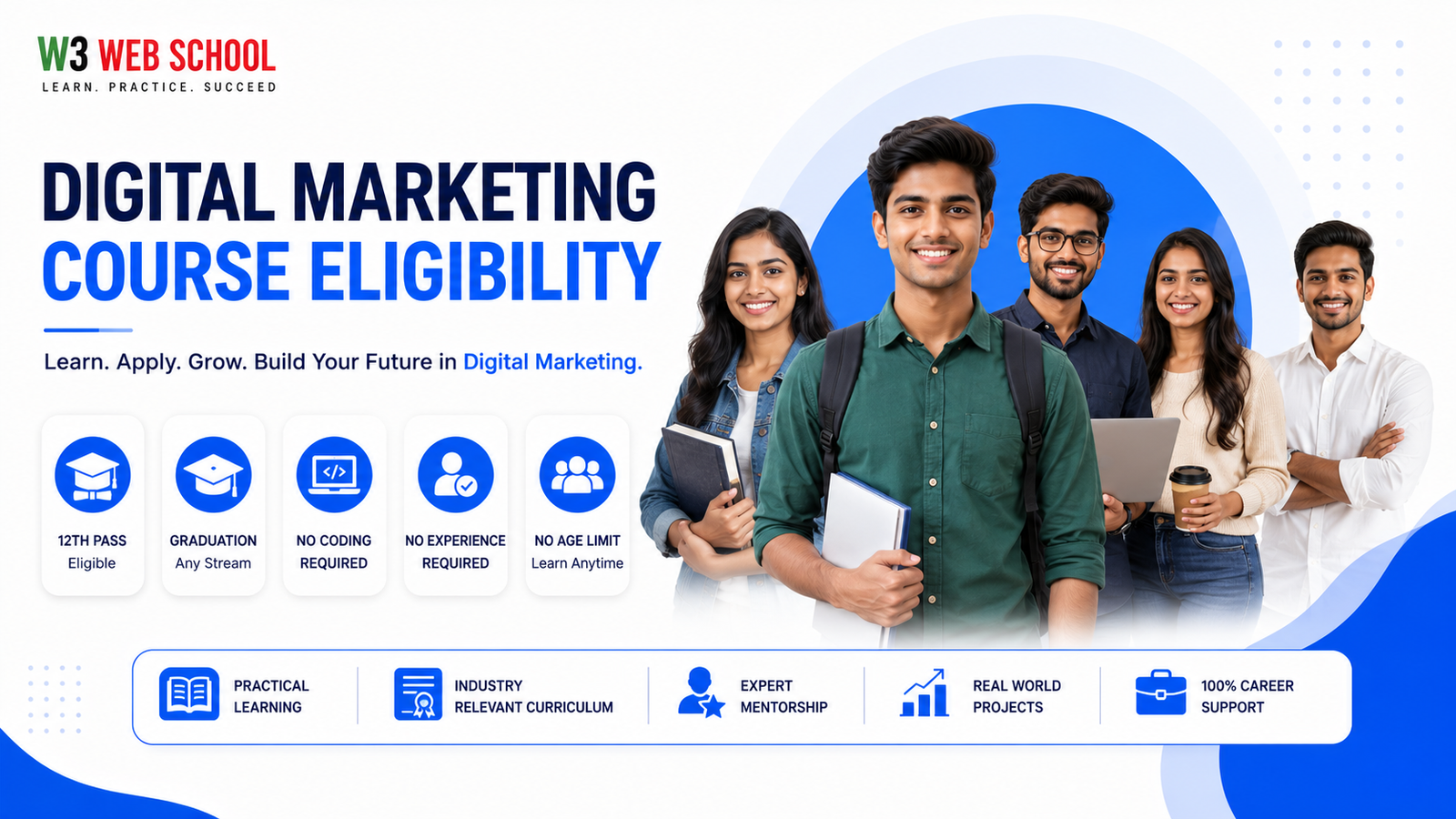
The eligibility for a digital marketing course is simple and flexible. Most institutes accept students who have completed Class 12 (10+2), along with graduates, working professionals, freelancers and business owners. Unlike many professional courses, digital marketing usually does not require a specific academic stream, coding knowledge or previous work experience.

Since digital marketing is a skill-based field, your willingness to learn, practise and apply concepts is often more important than your educational background. Whether you come from Science, Commerce, Arts or Engineering, you can build a successful career by developing practical digital marketing skills.

Quick Eligibility Overview

Eligibility CriteriaRequirement
Minimum Qualification10+2 (Class 12) or Equivalent
Graduation Required❌ No
Technical Background❌ Not Required
Coding Knowledge❌ Not Required
Prior Experience❌ Not Required
Age Limit✅ No Fixed Upper Age Limit

Who Is Eligible?

Most beginner-friendly and professional digital marketing courses are suitable for:

  • 12th pass students
  • College students
  • Graduates from any stream
  • Working professionals
  • Freelancers
  • Business owners and entrepreneurs

The exact eligibility may vary slightly depending on the institute and the course level, but the basic requirements remain similar across most training programs.

What Matters More Than Eligibility?

Meeting the eligibility criteria is only the first step. Your success in digital marketing depends more on developing practical skills than on academic qualifications.

Focus on building:

  • Practical knowledge through live projects
  • Problem-solving skills
  • Industry tool experience
  • A strong portfolio
  • Continuous learning habits

These factors usually have a greater impact on your career than your educational background alone.

Expert Tip: Employers generally look for candidates who can demonstrate practical skills and real project experience. A well-built portfolio often creates a stronger impression than academic qualifications alone.

📌 Quick Fact: You don't need to be a technical expert to start learning digital marketing. If you have basic computer knowledge, an interest in learning and the willingness to practise consistently, you're already eligible to begin your journey.

Minimum Qualification for a Digital Marketing Course

One of the most common questions students ask before enrolling is whether they meet the educational requirements for a digital marketing course. The good news is that most digital marketing programs have simple eligibility criteria, making them accessible to learners from completely different academic backgrounds.

Unlike rigid professional degree programs, digital marketing training focuses on developing practical execution skills rather than requiring a hyper-specific academic background. Whether you've completed Class 12, are currently pursuing graduation, or already hold a degree, you can start learning digital marketing skills immediately.

What Is the Minimum Qualification Required?

For most beginner to advanced digital marketing certification courses, the minimum qualification required is 10+2 (Class 12) or an equivalent qualification.

Some specialized post-graduate programs or university diplomas may ask for formal graduation, but for the majority of skill-focused institute training, completing Class 12 is fully sufficient for admission.

Educational QualificationEligible StatusRemarks & Details
10th Pass⚠ LimitedOnly a few institutes allow basic admission; 12th is preferred.
12th Pass✅ YesMeets the minimum qualification requirement for most courses.
Diploma Holder✅ YesEligible for both beginner and advanced marketing certifications.
Graduate (Any Stream)✅ YesHighly suitable for freshers and career switchers.
Postgraduate✅ YesIdeal to upskill, lead teams, or specialize in advanced marketing roles.

Does Your Academic Stream Matter?

No. Top institutes do not restrict admissions based on your academic stream. Students from almost any educational discipline can successfully transition into digital marketing careers:

  • Science (B.Sc)
  • Commerce (B.Com)
  • Arts (BA)
  • Engineering (B.Tech)
  • BBA / MBA
  • BCA / MCA
  • Other Streams

Employers generally value practical campaign knowledge, real-world portfolio work, certifications, and problem-solving abilities far more than your original college stream.

Academic Marks & Language Requirements

Do You Need a High Percentage in Academics?
No. There is usually no minimum percentage or GPA cutoff required for joining a digital marketing institute. Admission is primarily based on your enthusiasm to learn and your dedication to building practical skills.

Is English Knowledge Compulsory?
Basic reading and functional communication skills in English are helpful because most major digital marketing tools (Google Search Console, Meta Ads Manager, GA4) use English interfaces. However, trainers usually teach concepts in simple language, making it straightforward for non-native speakers to understand.

Key Takeaway

  • If you have passed Class 12 or hold an equivalent qualification, you are eligible for almost all digital marketing courses.
  • Your long-term success will ultimately depend on consistent practice, project experience, and applying marketing tactics to real business challenges.

Expert Insight: Digital marketing is one of the few global industries where employers evaluate practical skills, live project execution, and certifications over academic percentages. Building a strong project portfolio will always yield a higher return on investment than the theoretical degree you pursued.

Is There Any Age Limit for a Digital Marketing Course?

One of the biggest advantages of learning digital marketing is that there is generally no fixed age limit for joining a digital marketing course. Whether you're a student starting your career, a graduate looking for high-paying job opportunities, a working professional planning a career switch, or a business owner wanting to grow your brand online, you can learn digital marketing skills at almost any stage of your professional life.

Unlike traditional professional degrees that enforce strict admission age windows, digital marketing is a skill-based industry where your willingness to learn and practise consistently matters far more than your age.

Is There a Minimum Age Requirement?

Most digital marketing institutes prefer students who have completed 10+2 (Class 12) or an equivalent qualification. Since students generally finish Class 12 around the age of 17–18 years, this serves as the practical starting point for most beginner learners.

However, specific entry requirements may vary slightly depending on whether you are taking a basic skill course or an advanced diploma program.

Is There a Maximum Age Limit?

No. There is no upper age limit for enrolling in a digital marketing course. Learners across all age brackets successfully join training programs to achieve diverse goals:

  • Make a successful career switch into tech & marketing.
  • Upgrade existing corporate marketing and sales skills.
  • Start high-paying freelancing services.
  • Launch and scale an independent online business.
  • Improve modern brand visibility and performance strategies.

Age-Wise Eligibility Overview

Age GroupEligible StatusSuitable Target Audience
Below 17 Years⚠ Depends on InstituteBasic skill development and foundation learning
17–20 Years✅ Yes12th pass students and early college learners
21–30 Years✅ YesCollege graduates, job seekers, and freshers
31–45 Years✅ YesWorking professionals and career switchers
45+ Years✅ YesEntrepreneurs, business owners, and consultants

Does Age Affect Career Opportunities?

No. When hiring digital marketing talent, top employers evaluate candidates based on tangible proof of work rather than age. Key parameters include:

  • Practical digital marketing campaign skills.
  • Hands-on live project experience.
  • Quality of your marketing portfolio.
  • Analytical thinking and problem-solving ability.
  • Effective communication and strategic planning.

Key Takeaway

  • Whether you're 18 or 45, you can start learning digital marketing at any point if you are committed to developing practical skills.
  • Long-term career success relies far more on staying updated with AI tools and industry trends than on your chronological age.

Expert Insight: Many of the most successful digital marketers and performance growth leads begin their journey post-graduation or during mid-career switches. In this performance-driven industry, your capacity to adapt, learn, and drive ROI will always take precedence over age.

Can 10th Pass Students Join a Digital Marketing Course?

Yes, some institutes allow 10th pass students to join beginner-level digital marketing courses, although Class 12 (10+2) is the minimum qualification preferred by most professional training institutes.

If you've completed Class 10 and want to start learning digital marketing early, you can build foundational skills such as SEO, social media marketing, content creation, and basic website management. However, completing your higher secondary education while developing these skills is generally the better long-term approach for career growth.

What Can a 10th Pass Student Learn?

A beginner can start by understanding the core fundamentals of digital marketing, including:

  • Search Engine Optimization (SEO)
  • Social Media Marketing
  • Content Marketing
  • Blogging Basics
  • WordPress Fundamentals
  • Basic Graphic Design
  • Introduction to AI Tools

These topics provide a strong foundation before moving on to advanced concepts like paid advertising campaigns, web analytics, and performance marketing.

Should You Join After 10th or Wait Until 12th?

Both options have unique advantages depending on your personal learning goals and timeline.

Join After 10th If You:

  • Want to explore digital marketing as a practical skill.
  • Enjoy learning hands-on and creative subjects.
  • Plan to build freelancing skills early in life.
  • Want to gain practical experience before entering college.

Join After 12th If You:

  • Want access to broader professional certification programs.
  • Plan to apply directly for internships or entry-level jobs.
  • Prefer learning alongside higher education or graduation.

For most students, completing Class 12 while continuing to learn digital marketing self-paced offers the most balanced and practical path forward.

Is It Easy to Learn Digital Marketing After 10th?

Yes. Digital marketing does not require advanced mathematics or coding/programming knowledge to get started. Students with basic computer knowledge, active internet browsing skills, good communication, and a strong curiosity to learn can easily grasp digital marketing concepts with regular practice.

Quick Comparison: After 10th vs. After 12th

CriteriaAfter 10thAfter 12th
Eligible to Learn✅ Yes (Basic Courses)✅ Yes (Full Programs)
Professional Certification Options⚠ Limited✅ More Available
Internship Opportunities⚠ Limited✅ Better Industry Placement
Career Readiness⚠ Foundation Stage✅ Strong Job Readiness

Key Takeaway

  • Starting after Class 10 helps you build early digital skills, but completing Class 12 before enrolling in an advanced professional course generally provides superior career placement and opportunities.
  • Balancing school education with foundational online marketing learning creates the best long-term career path.

Expert Insight: Learning digital marketing early is a fantastic idea, but there is no need to rush into intensive advanced training immediately after Class 10. Building strong core fundamentals while finishing high school creates a far more stable and successful career trajectory.

Can 12th Pass Students Join a Digital Marketing Course?

Yes, 12th pass students are fully eligible to join most digital marketing courses. In fact, completing Class 12 (10+2) is the minimum educational qualification accepted by the vast majority of professional digital marketing training institutes in India.

Many ambitious students choose to start learning digital marketing immediately after school because it allows them to develop practical, job-ready skills alongside their regular college degree. Starting early provides ample time to gain hands-on campaign experience, build an impressive portfolio, and secure valuable internships before graduation.

Why Is Digital Marketing a Good Option After 12th?

Digital marketing is a performance-driven field where practical application outweighs pure academic degrees. Instead of waiting until graduation to acquire job-ready expertise, learning early gives you a significant head start.

  • Learn industry-relevant marketing skills right from the beginning.
  • Gain practical experience and complete live projects before graduation.
  • Build a professional digital marketing portfolio.
  • Explore paid internships and lucrative freelance projects.
  • Stay far ahead of peers in a competitive post-graduation job market.

Which Students Can Join After 12th?

Students from all major educational streams can pursue a digital marketing certification without any restrictions:

  • Science Stream
  • Commerce Stream
  • Arts (Humanities)
  • Vocational Education

Your high school academic stream does not limit your ability to master marketing. What matters most is your curiosity, consistency, and willingness to learn modern digital tools.

Can I Study Digital Marketing Along With College?

Yes. Many students successfully balance a digital marketing course while pursuing their bachelor's degree (BA, B.Com, B.Sc, BBA, BCA, B.Tech, etc.).

  • Acquire industry skills in weekend or evening batches alongside your college degree.
  • Apply for part-time internships or remote work during college years.
  • Build a strong, skill-backed resume before campus placements begin.
  • Apply practical marketing tactics to real-world business case studies.

By the time you graduate, you will possess both a formal university degree and real-world digital marketing experience.

Skills You'll Start Learning

A beginner-friendly digital marketing program introduces students to essential growth modules:

  • Search Engine Optimization (SEO)
  • Google Ads (PPC)
  • Social Media Marketing
  • Content Marketing
  • Email Marketing
  • Google Analytics 4 (GA4)
  • WordPress Basics
  • AI-Powered Marketing Tools

Career Opportunities After Learning Digital Marketing

Students who develop practical skills can explore entry-level roles and freelance paths such as:

  • Digital Marketing Executive
  • SEO Executive
  • Social Media Executive
  • Content Marketing Executive
  • Google Ads Associate
  • Email Marketing Specialist
  • Freelance Marketer

Quick Overview: Eligibility & Requirements

QuestionAnswer & Status
Can 12th pass students join?✅ Yes, fully eligible for most training programs
Is graduation compulsory?❌ No, Class 12 is sufficient for skill training
Can all streams apply?✅ Yes (Science, Commerce, Arts, Vocational)
Can I learn alongside college?✅ Yes, flexible weekend & online batches are available
Do I need coding knowledge?❌ No prior programming or coding skills required

Expert Insight: Starting a digital marketing course right after Class 12 gives you an extraordinary advantage. By the time most peers begin searching for entry-level internships post-graduation, you will already possess hands-on skills, active project experience, and a live portfolio that sets you apart instantly.

Can Graduates from Any Stream Join a Digital Marketing Course?

Yes, graduates from any educational background can join a digital marketing course. Whether you have completed a degree in Arts, Commerce, Science, Engineering, Management, or any other discipline, you can learn digital marketing without any prior marketing experience.

Unlike many specialized professions, digital marketing is a skill-based industry where practical knowledge, problem-solving ability, and hands-on campaign experience are generally far more important than your specific academic stream. This makes it an excellent career option for graduates looking to improve their employability or make a smooth career transition.

Graduates from All Streams Are Eligible

Most digital marketing training institutes accept graduates from recognized universities regardless of their field of study. You can join if you hold any of the following degrees:

  • BA (Bachelor of Arts)
  • B.Com (Commerce)
  • B.Sc (Science)
  • BBA (Management)
  • BCA (Computer Applications)
  • B.Tech / BE (Engineering)
  • MBA (Business Admin)
  • MA / M.Com / M.Sc

Your graduation degree establishes your academic foundation, while digital marketing equips you with practical execution skills that are directly applicable across tech, retail, finance, healthcare, and e-commerce sectors.

Why Do Graduates Choose Digital Marketing?

Many college graduates enroll in digital marketing programs to accelerate their career prospects and secure industry-ready capabilities:

  • Build practical, job-ready skills alongside traditional academic degrees.
  • Prepare for high-growth internships and corporate entry-level job roles.
  • Unlock flexible freelancing and remote work opportunities.
  • Successfully switch to a rapidly growing, high-demand field.
  • Enhance career mobility across modern marketing, advertising, and e-commerce.

Digital marketing is frequently chosen because it seamlessly blends creativity, technology, data analytics, and business strategy into a single profession.

Does Your Graduation Stream Affect Your Career?

Not significantly. Every academic stream brings distinct, built-in advantages to different areas of digital marketing:

Commerce Graduates

Grasp business models, ROI calculations, and conversion metrics quickly.

Science & Tech (B.Tech/BCA)

Excel at technical SEO, web analytics (GA4), and data-driven ad optimization.

Arts & Humanities

Naturally excel in content writing, copywriting, social media branding, and storytelling.

Management (BBA/MBA)

Hold an advantage in growth strategy, media planning, and business development.

Skills That Matter More Than Your Degree

While your college degree provides academic credentials, digital marketing employers prioritize candidates with hands-on technical abilities:

  • Search Engine Optimization (SEO)
  • Google Ads (PPC)
  • Social Media Marketing
  • Content Marketing
  • Google Analytics 4 (GA4)
  • Email Marketing
  • WordPress Management
  • AI Marketing Workflows

Career Opportunities for Graduates

Upon completing a comprehensive digital marketing program, graduates can pursue job titles such as:

  • Digital Marketing Executive
  • SEO Executive
  • Social Media Executive
  • Content Marketing Executive
  • PPC Executive
  • Performance Marketing Associate
  • Email Marketing Executive
  • Digital Marketing Analyst

Quick Overview: Graduate Eligibility

QuestionAnswer & Status
Can graduates join a digital marketing course?✅ Yes, fully eligible across all university degrees
Does graduation stream matter?❌ No, all streams bring valuable transferable skills
Is prior marketing experience required?❌ No, courses start from basic fundamental concepts
Can graduates from Arts, Commerce, Science apply?✅ Yes, all standard bachelor's streams are welcome
Can engineering and management graduates join?✅ Yes, ideal for analytical and strategic roles

Expert Insight: Your graduation degree opens the door, but your digital marketing skills determine how far you can grow. Employers consistently value candidates who can demonstrate practical campaign execution, analytical thinking, and a live project portfolio over their original college major.

Can Working Professionals Learn Digital Marketing?

Yes, working professionals can successfully learn digital marketing, regardless of their current industry or job role. Many professionals enroll in digital marketing courses to upgrade their skill set, explore better career opportunities, or transition smoothly into the digital marketing sector.

With flexible online, weekend, and evening batches offered by top training institutes, learning digital marketing has become highly convenient for individuals balancing full-time employment commitments.

Why Do Working Professionals Choose Digital Marketing?

Career goals naturally evolve over time. Some professionals aim to switch industries entirely, while others want to advance within their current organization by acquiring high-demand digital skills.

  • Planning a smooth career transition into a high-growth sector.
  • Upskilling to unlock higher salary brackets and promotion opportunities.
  • Leveraging digital channels for direct business growth or startup scaling.
  • Establishing flexible freelance or consulting revenue streams.
  • Staying competitive and relevant in a digital-first corporate environment.

As businesses rapidly shift budgets to online channels, digital skills have become immensely valuable across almost every traditional industry.

Who Can Benefit?

Professionals from virtually any corporate or technical background can learn digital marketing and apply it effectively:

  • Sales Professionals
  • Marketing Executives
  • Customer Support
  • HR Professionals
  • IT Professionals
  • Business Development
  • Teachers & Trainers
  • Banking & Finance
  • Healthcare Professionals

Your current job title does not limit your potential to build a thriving career in digital marketing.

Is It Difficult to Learn While Working?

Not necessarily. Thousands of professionals complete courses by dedicating just 1–2 hours a day to guided learning and hands-on practice.

Weekly Schedule

Set a structured learning timetable during weekend or evening slots.

Practical Work

Complete hands-on assignments regularly to build muscle memory.

Live Projects

Apply digital concepts directly through real-world micro-projects.

Consistent Revision

Revise topics iteratively rather than attempting to cram modules all at once.

Can Working Professionals Switch Careers?

Yes. Many professionals successfully pivot into digital marketing roles after gaining practical campaign knowledge and constructing a verified project portfolio.

  • SEO Specialist
  • Performance Marketer
  • Google Ads Specialist
  • Social Media Manager
  • Content Strategist
  • Digital Marketing Strategist
  • Marketing Automation Specialist

The transition becomes significantly easier when you can validate your expertise through active campaign results, Google certifications, and practical portfolios.

Quick Overview: Working Professional Eligibility

QuestionAnswer & Status
Can working professionals join?✅ Yes, open to professionals across all industries
Is prior marketing experience required?❌ No, programs cover fundamental to advanced concepts
Can I learn while doing a full-time job?✅ Yes, requires only 1–2 hours of daily commitment
Are weekend or online batches available?✅ Yes, most leading institutes offer flexible timing
Is digital marketing a good career switch?✅ Yes, highly rewarding when backed by practical skills

Expert Insight: Working professionals bring invaluable corporate domain knowledge, professional communication skills, and real-world problem-solving abilities to digital marketing. When paired with structured training and practical campaign execution, these existing strengths make career transitions much smoother and faster.

Can Business Owners and Entrepreneurs Learn Digital Marketing?

Absolutely. Business owners and entrepreneurs can greatly benefit from learning digital marketing, even if they don't plan to become full-time digital marketers. Understanding the core fundamentals of online marketing empowers you to make informed decisions, evaluate marketing strategies, and communicate far more effectively with your internal team or external marketing agency.

Today's modern customers search, compare, and purchase products online. Having a foundational grasp of digital marketing enables business leaders to build long-term brand awareness, generate high-quality leads, and track return on investment (ROI) with real data.

Why Should Business Owners Learn Digital Marketing?

Running a successful enterprise requires more than just offering a great product or service. Reaching the right target audience at the precise moment of intent is equally critical.

  • Generate consistent, high-quality sales leads through online acquisition channels.
  • Improve website search visibility on Google to capture organic customer demand.
  • Understand paid ad platforms like Google Ads and Meta Ads to avoid wasted ad spend.
  • Build an authentic, highly engaged social media presence for your brand.
  • Measure true campaign performance and ROI using precise analytics dashboards.
  • Reduce total dependency on costly third-party digital agencies or consultants.

Do You Need a Marketing Background?

No. A formal marketing degree or past agency experience is not required. Beginner-friendly digital marketing programs start with fundamental building blocks before moving into practical tools:

  • Search Engine Optimization (SEO)
  • Google Ads & PPC
  • Social Media Marketing
  • Content Strategy
  • Email Automation
  • Google Analytics 4 (GA4)
  • AI Tools for Marketing

These core modules are taught through actionable case studies, making them simple to absorb and immediately apply to your active venture.

How Can Digital Marketing Help Your Business?

Entrepreneurs who acquire digital marketing knowledge transform their business trajectory across multiple key areas:

Customer Acquisition

Attract qualified prospects online instead of relying solely on offline word-of-mouth.

Local Visibility

Dominate local search results and Google Maps listings in your target service area.

Trust & Authority

Establish brand credibility through insightful, conversion-focused content strategies.

Budget Optimization

Make data-backed decisions on ad spend rather than relying on guesswork.

Quick Overview: Entrepreneur Eligibility

QuestionAnswer & Status
Can business owners join a digital marketing course?✅ Yes, highly recommended for founders and owners
Is prior marketing knowledge required?❌ No, modules begin with core fundamentals
Is coding knowledge necessary?❌ No, tools are no-code and user-friendly
Can digital marketing help grow a business?✅ Yes, drives direct traffic, leads, and online revenue
Is it suitable for complete beginners?✅ Yes, designed for non-marketers and busy founders

Expert Insight: Business owners don't need to execute every single marketing tactic themselves. However, acquiring fundamental digital marketing knowledge allows you to ask sharper questions, audit campaign reports accurately, evaluate team or agency performance, and direct your growth capital with confidence.

Do You Need Technical or Coding Skills to Learn Digital Marketing?

No, you do not need technical or coding skills to learn digital marketing. Most beginner-level digital marketing courses are specifically designed for high school graduates, college students, non-tech working professionals, and business owners with zero programming background.

Digital marketing focuses primarily on understanding customer psychology—learning how to attract, engage, and convert target audiences through online channels. While a few advanced technical roles exist, the vast majority of digital marketing concepts can be completely mastered without writing a single line of code.

What Skills Are More Important Than Coding?

Instead of software programming, successful digital marketers rely on practical soft skills and strategic thinking:

  • Communication & Content Writing: Crafting persuasive copy for ads, emails, and landing pages.
  • Creativity & Problem-Solving: Designing engaging campaigns that capture consumer attention.
  • Analytical Thinking: Reading performance numbers to understand what strategies drive revenue.
  • Research & Planning: Studying market trends, competitor tactics, and customer behavior.
  • Basic Computer Literacy: Navigating standard web browsers, spreadsheets, and online dashboards.
  • Adaptability: Eagerness to explore and adopt new digital tools and technologies.

Developing these core competencies will have a far greater impact on your career success than learning traditional programming languages.

Will You Use Technical Tools?

Yes, but they are no-code platforms. Modern digital marketing relies on user-friendly web platforms built for marketers, not software engineers. During your training, you will work with industry-standard tools such as:

  • Google Analytics 4 (GA4)
  • Google Search Console
  • Google Ads Dashboard
  • Meta Ads Manager
  • WordPress (CMS)
  • Canva Graphic Design
  • Google Tag Manager (Basic)
  • AI Workflows & Tools

These platforms feature intuitive drag-and-drop interfaces, visual reporting dashboards, and graphical controls that make them completely accessible to beginners.

When Can Basic Technical Knowledge Be Helpful?

Although coding isn't mandatory, acquiring a rudimentary understanding of basic web elements (like HTML tags or site architecture) can be an added advantage in specialized areas like Technical SEO or site speed optimization.

However, these concepts are simple to pick up and are introduced step-by-step during practical training. They serve as an extra advantage rather than a strict prerequisite.

Quick Overview: Coding & Tech Requirements

QuestionAnswer & Status
Is coding required?❌ No programming knowledge is needed
Is a technical background necessary?❌ No, open to Arts, Commerce, and non-tech backgrounds
Can non-tech beginners learn digital marketing?✅ Yes, designed for complete beginners
Are digital marketing tools beginner-friendly?✅ Yes, features no-code visual interfaces
Is basic HTML useful?✅ Helpful for SEO, but not mandatory to start

Expert Insight: Many of the most successful digital marketers come from non-technical backgrounds like Commerce, Arts, Management, and Sales. Practical execution, consistency, analytical curiosity, and hands-on campaign management contribute significantly more to career growth than coding expertise ever will.

Essential Skills That Help You Learn Digital Marketing Faster

While there are no strict eligibility requirements for learning digital marketing, developing a few essential skills can make your learning journey smoother and far more effective. The good news is that these skills can be easily cultivated through regular practice, even if you are starting as a complete beginner.

Remember, you don't need to master everything before enrolling in a course. Most of these core abilities improve naturally as you work on practical assignments, run live campaigns, and gain real-world project experience.

Core Foundational Skills

1. Basic Computer Skills

Digital marketing involves working with websites, software tools, and web browsers. Knowing how to use a computer, manage files, and navigate the internet comfortably serves as a great starting point.

2. Communication Skills

Whether writing website copy, social media posts, or client emails, clear communication is vital. You don't need perfect English—focusing on expressing ideas clearly will produce better campaign results.

3. Creativity

Marketers craft engaging content, eye-catching visual ads, and strategic campaigns. Creative thinking helps you capture user attention and solve marketing challenges. Creativity improves steadily with observation and practice.

4. Analytical Thinking

Digital marketing is as much about data as it is about creativity. Learning to analyze website traffic, campaign metrics, and user behavior helps you optimize budget allocation and make data-driven decisions.

5. Curiosity & Continuous Learning

Search engine algorithms, social media platforms, and AI tools evolve constantly. Maintaining curiosity and staying updated with modern trends will keep you competitive throughout your career trajectory.

6. Problem-Solving Ability

Every campaign is unique. If an ad drops in performance or a site loses search rank, a problem-solving mindset helps you diagnose issues, test alternative tactics, and continuously refine performance.

Skills Checklist for Beginners

SkillImportant for Beginners?
Basic Computer Knowledge✅ Yes, essential for operating web tools
Communication Skills✅ Yes, key for content and ad copywriting
Creativity✅ Yes, helps design engaging campaigns
Analytical Thinking✅ Yes, needed to read campaign data & ROI
Curiosity to Learn✅ Yes, vital for keeping up with industry updates
Problem-Solving✅ Yes, crucial for optimizing ad performance
Coding Knowledge❌ Not Required (Visual tools handle execution)

Can These Skills Be Learned During the Course?

Absolutely. Most beginners join with little to no prior marketing experience, and that is completely normal. A well-structured digital marketing program systematically helps you construct these capabilities step-by-step:

  • Build technical tool mastery through step-by-step practical assignments.
  • Develop campaign copywriting skills through guided ad creation exercises.
  • Practice live data interpretation using real Google Analytics 4 dashboards.
  • Refine strategy and problem-solving techniques on active website projects.

Instead of trying to become an expert before enrolling, focus on maintaining an open learning mindset and practicing consistently. Over time, both your execution confidence and marketability will rise significantly.

Expert Insight: Successful digital marketers aren't defined by their original educational background—they are recognized for their commitment to continuous learning, fast adaptation to new technologies, and ability to apply practical knowledge to solve real business growth challenges.