Digital Marketing Course Eligibility (2026): Who Can Join, Qualification, Age Limit & Career Scope
Choosing the right career starts with understanding whether you're eligible to pursue it. If you're wondering who can join a digital marketing course, what qualifications are required or whether there's any age limit, you're not alone. These are some of the most common questions students, graduates and working professionals ask before taking admission.
The good news is that digital marketing is a skill-based field that welcomes learners from different educational and professional backgrounds. Whether you've completed Class 12, graduated from college, want to switch careers or plan to grow your own business, you can start learning digital marketing without a technical background or coding knowledge.
This guide explains everything you need to know about digital marketing course eligibility, including the minimum qualification, age requirements, who can apply, essential skills and career opportunities. By the end, you'll have a clear understanding of whether this career path matches your goals and what to look for before enrolling in a course.
- Understand the eligibility criteria for a digital marketing course.
- Find out who can join after 12th, graduation or while working.
- Learn about the minimum qualification and age requirements.
- Know whether coding or technical knowledge is necessary.
- Explore career opportunities and the skills needed to get started.
Before You Read (60-Second Overview)
If you're planning to join a digital marketing course but aren't sure whether you're eligible, this guide will answer the most common admission-related questions in one place. Whether you're a student, graduate, working professional or business owner, you'll understand the basic eligibility requirements before making your decision.
- Who is eligible to join a digital marketing course
- Minimum educational qualification required
- Is there any age limit?
- Can 10th pass and 12th pass students apply?
- Can graduates from any stream join?
- Is coding or technical knowledge required?
- Essential skills for beginners
- Career opportunities after completing the course
Unlike many articles that only mention eligibility, this guide also explains who should join, what skills are actually required, common misconceptions, career opportunities and how to choose the right digital marketing course—helping you make a well-informed decision instead of relying on advertisements alone.
Who Should Read This Guide?
Digital marketing is one of the few career options that welcomes learners from different educational and professional backgrounds. Whether you're planning your first job, looking to upgrade your skills or exploring a career change, understanding the eligibility criteria can help you make a more informed decision.
This guide is designed for anyone who wants to know whether they're eligible to join a digital marketing course and what to expect before taking admission.
This Guide Is Perfect For:
If you've recently completed Class 12 and are exploring career-oriented courses, this guide will help you understand whether digital marketing is the right choice and what opportunities it offers after school.
Want to build practical skills alongside your degree or improve your employability after graduation? This guide explains the eligibility requirements and how digital marketing can complement your academic education.
If you're planning a career switch or want to upskill without leaving your current job, you'll learn whether digital marketing is suitable for your experience level and career goals.
Whether you're a content writer, designer, developer or independent consultant, digital marketing skills can help you attract more clients and expand your service offerings.
If you want to generate more leads, improve your online presence or understand how digital marketing works, this guide will help you determine whether learning digital marketing is the right investment for your business.
If you're unsure about the minimum qualification, age limit, technical background or coding requirements, this guide answers the most common questions in a simple and practical way.
By the End of This Guide, You'll Know
- Whether you're eligible to join a digital marketing course.
- Which educational qualifications are accepted.
- Whether age or previous work experience matters.
- If coding or technical knowledge is required.
- How to choose a course that matches your career goals.
Quick Note: There isn't one ideal profile for learning digital marketing. Students, graduates, professionals and entrepreneurs can all succeed in this field by developing practical skills and staying consistent with learning.
What Is the Eligibility for a Digital Marketing Course?
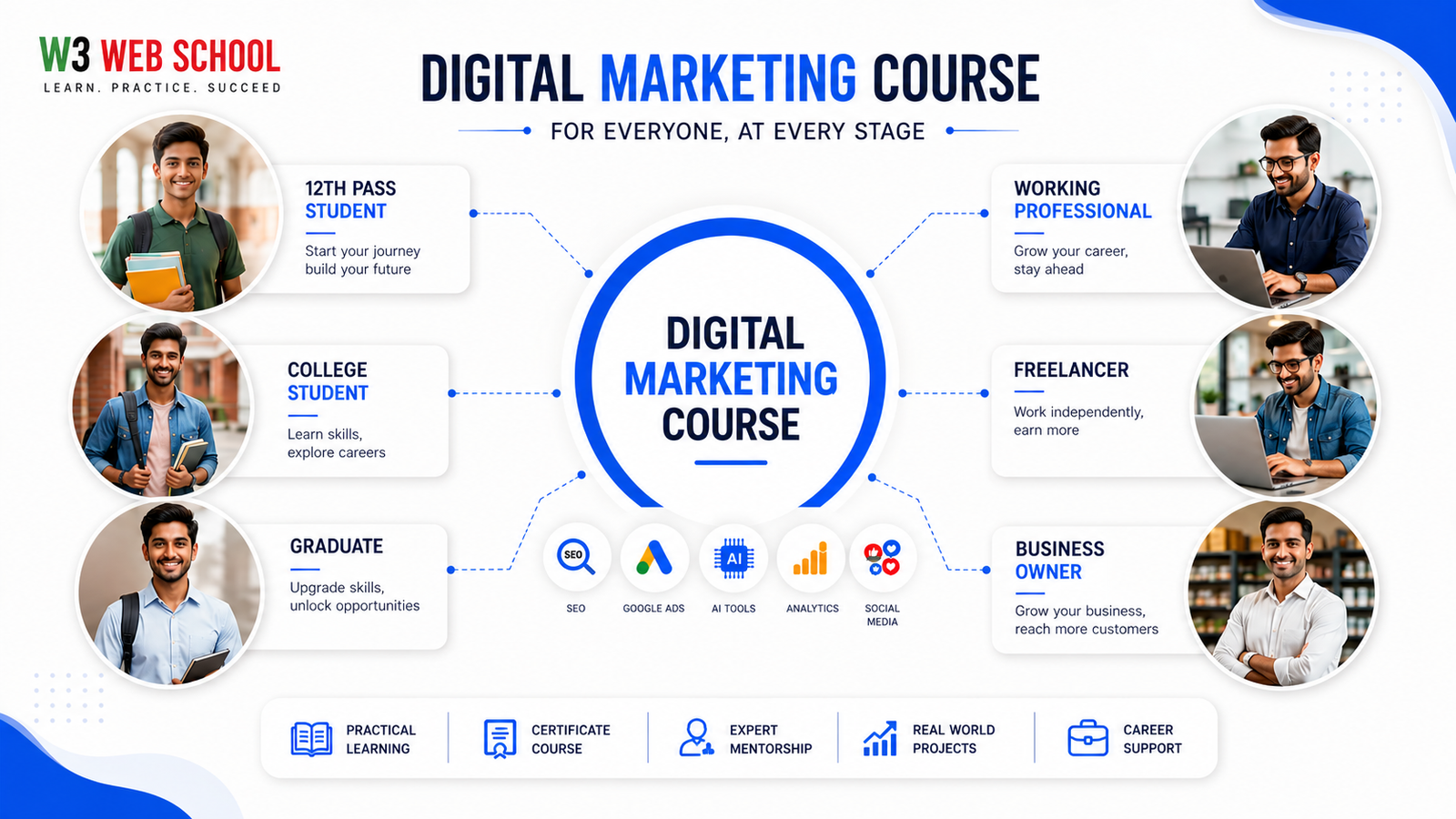
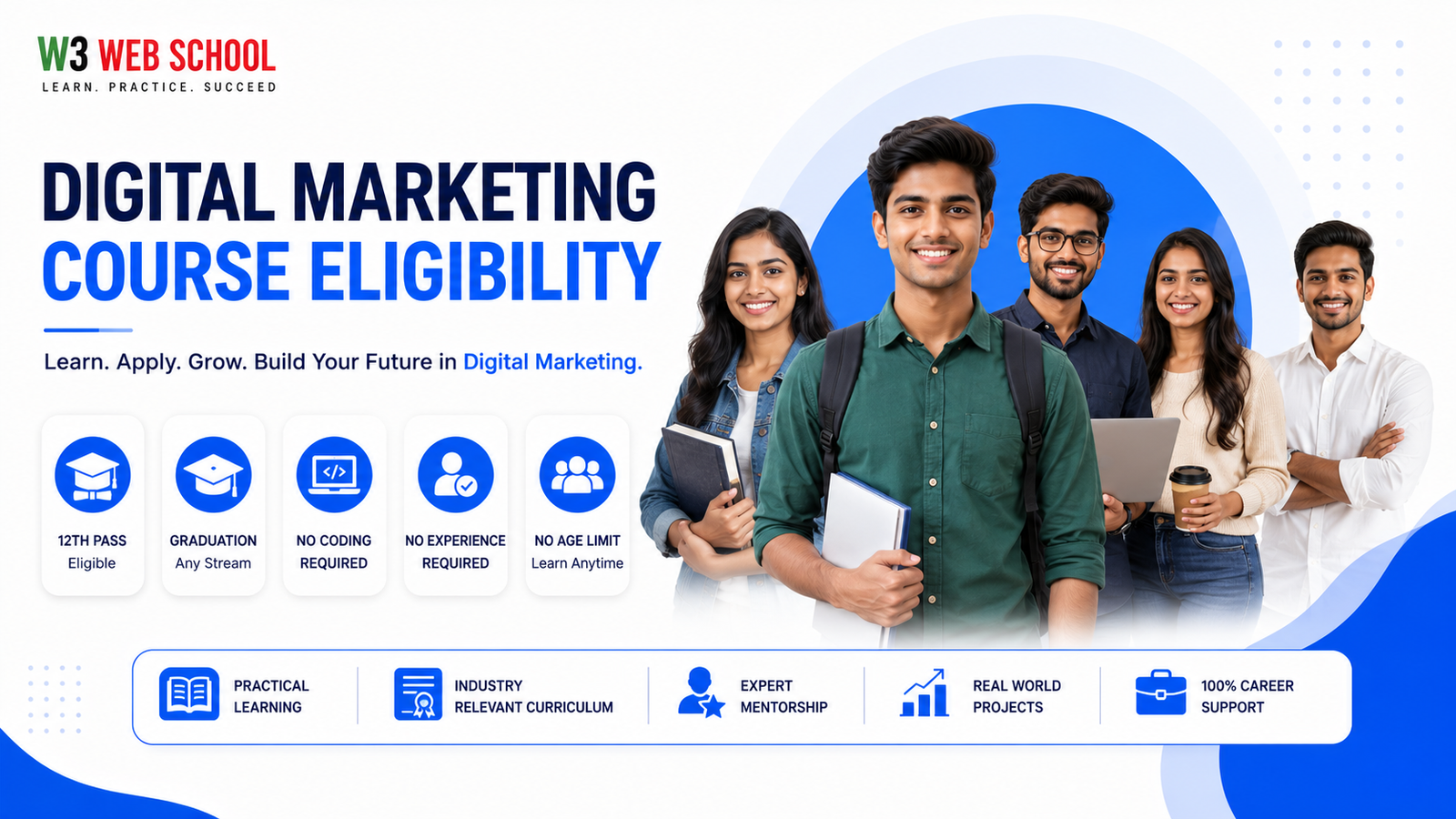
The eligibility for a digital marketing course is simple and flexible. Most institutes accept students who have completed Class 12 (10+2), along with graduates, working professionals, freelancers and business owners. Unlike many professional courses, digital marketing usually does not require a specific academic stream, coding knowledge or previous work experience.
Since digital marketing is a skill-based field, your willingness to learn, practise and apply concepts is often more important than your educational background. Whether you come from Science, Commerce, Arts or Engineering, you can build a successful career by developing practical digital marketing skills.
Quick Eligibility Overview
| Eligibility Criteria | Requirement |
|---|---|
| Minimum Qualification | 10+2 (Class 12) or Equivalent |
| Graduation Required | ❌ No |
| Technical Background | ❌ Not Required |
| Coding Knowledge | ❌ Not Required |
| Prior Experience | ❌ Not Required |
| Age Limit | ✅ No Fixed Upper Age Limit |
Who Is Eligible?
Most beginner-friendly and professional digital marketing courses are suitable for:
- 12th pass students
- College students
- Graduates from any stream
- Working professionals
- Freelancers
- Business owners and entrepreneurs
The exact eligibility may vary slightly depending on the institute and the course level, but the basic requirements remain similar across most training programs.
What Matters More Than Eligibility?
Meeting the eligibility criteria is only the first step. Your success in digital marketing depends more on developing practical skills than on academic qualifications.
Focus on building:
- Practical knowledge through live projects
- Problem-solving skills
- Industry tool experience
- A strong portfolio
- Continuous learning habits
These factors usually have a greater impact on your career than your educational background alone.
Expert Tip: Employers generally look for candidates who can demonstrate practical skills and real project experience. A well-built portfolio often creates a stronger impression than academic qualifications alone.
📌 Quick Fact: You don't need to be a technical expert to start learning digital marketing. If you have basic computer knowledge, an interest in learning and the willingness to practise consistently, you're already eligible to begin your journey.
Minimum Qualification for a Digital Marketing Course
One of the most common questions students ask before enrolling is, "What qualification is required for a digital marketing course?" The answer is straightforward. For most beginner and professional digital marketing courses, the minimum qualification is Class 12 (10+2) or an equivalent qualification.
However, digital marketing is a skill-based field, so your ability to learn and apply practical concepts is generally more important than your academic stream or percentage.
Qualification Requirements at a Glance
| Educational Qualification | Eligible? | Notes |
|---|---|---|
| 10th Pass | ⚠ Limited | Some institutes offer foundation or basic courses |
| 12th Pass (10+2) | ✅ Yes | Accepted by most digital marketing institutes |
| Diploma Holder | ✅ Yes | Eligible for beginner and advanced courses |
| Graduate (Any Stream) | ✅ Yes | Suitable for freshers and career switchers |
| Postgraduate | ✅ Yes | Can upskill or specialise in digital marketing |
Does Your Academic Stream Matter?
No. Whether you studied Science, Commerce, Arts, Engineering or Management, you can pursue a digital marketing course.
Most employers and training institutes focus on practical knowledge rather than your educational background. Once you develop skills through projects and hands-on training, your academic stream becomes far less important.
Is Graduation Mandatory?
No. Graduation is not compulsory for joining a digital marketing course. Many students begin learning immediately after completing Class 12, while others choose to upskill during or after graduation.
If your goal is to build practical skills and prepare for digital marketing careers, starting early can give you more time to gain experience before entering the job market.
Does Your Academic Percentage Matter?
In most cases, there is no minimum percentage requirement for admission. Institutes generally look for learners who are interested in developing practical digital marketing skills rather than focusing only on academic scores.
Your commitment to learning, completing projects and improving your skills will have a much greater impact on your career growth.
📌 Quick Tip: If you've completed Class 12 or graduation, you already meet the eligibility criteria for most digital marketing courses. Instead of worrying about your academic background, focus on choosing a course that offers an updated syllabus, live projects, AI tools and practical training.
Educational qualification is important, but many students also wonder whether there's any age limit for learning digital marketing. Let's clear that up next.
Is There Any Age Limit for a Digital Marketing Course?
No, there is no fixed upper age limit for joining a digital marketing course. Whether you're an 18-year-old student, a recent graduate, a working professional or a business owner, you can learn digital marketing at any stage of your career.
Since digital marketing is a skill-based profession, success depends more on your practical knowledge, consistency and willingness to learn than on your age. This flexibility makes it one of the most accessible career options for learners from different age groups.
What Is the Minimum Age to Join?
Most institutes prefer candidates who have completed Class 12 (10+2). As students usually finish Class 12 around the age of 17–18 years, this becomes the practical starting point for many beginner-level courses.
However, admission criteria may vary slightly depending on the institute and course structure.
Is There a Maximum Age Limit?
No. There is no maximum age limit for learning digital marketing.
Many learners join digital marketing courses to:
- Switch to a new career.
- Upgrade their professional skills.
- Start freelancing.
- Grow their business online.
- Stay updated with digital marketing trends.
Your learning ability and commitment matter far more than your age.
Age-Wise Eligibility Overview
| Age Group | Eligible? | Suitable For |
|---|---|---|
| Below 17 Years | ⚠ Depends on the institute | Foundation-level learning |
| 17–20 Years | ✅ Yes | Students after Class 12 |
| 21–30 Years | ✅ Yes | College students and graduates |
| 31–45 Years | ✅ Yes | Working professionals and career switchers |
| 45+ Years | ✅ Yes | Business owners, freelancers and lifelong learners |
Does Age Affect Career Opportunities?
Generally, no. Employers usually evaluate candidates based on:
- Practical digital marketing skills
- Portfolio and project experience
- Problem-solving ability
- Communication skills
- Ability to learn new tools and technologies
A candidate with strong practical skills is often preferred over someone who only meets academic criteria.
📌 Quick Tip: It's never too early or too late to learn digital marketing. If you have basic computer knowledge and a genuine interest in learning, you can start building valuable digital skills regardless of your age.
Do You Need Coding or Technical Skills to Learn Digital Marketing?
No, coding or a technical background is not required to learn digital marketing. Most beginner-friendly digital marketing courses are designed for students, graduates, working professionals and business owners with little or no technical experience.
Digital marketing is more about understanding customer behaviour, creating valuable content, improving online visibility and analysing campaign performance than writing code. While basic technical knowledge can be helpful in certain situations, it is not a prerequisite for getting started.
Is Coding Required in Digital Marketing?
For most digital marketing roles, the answer is No.
You can build a successful career without learning programming languages. Modern marketing tools are user-friendly and allow beginners to perform most tasks through simple dashboards instead of writing code.
When Is Technical Knowledge Helpful?
Although coding isn't mandatory, having a basic understanding of websites can be useful for tasks like:
- Making simple website updates
- Understanding SEO recommendations
- Improving page speed with developer support
- Using Google Tag Manager (basic level)
These are supportive skills and are usually introduced during practical training. You don't need to master them before joining a course.
Skills That Matter More Than Coding
Instead of programming, successful digital marketers focus on developing practical skills such as:
- Communication and content writing
- Creativity
- Analytical thinking
- Basic computer skills
- Research and problem-solving
- Learning AI-powered marketing tools
These skills have a much greater impact on long-term career growth than coding knowledge.
Coding vs Practical Skills
| Skill | Required? |
|---|---|
| Coding | ❌ No |
| Technical Background | ❌ No |
| Basic Computer Knowledge | ✅ Yes |
| Communication Skills | ✅ Yes |
| Creativity | ✅ Yes |
| Analytical Thinking | ✅ Yes |
| AI Tool Awareness | ✅ Helpful |
📌 Quick Tip: Don't let the fear of coding stop you from learning digital marketing. Thousands of successful SEO specialists, content marketers, social media managers and performance marketers come from non-technical backgrounds. Start with the fundamentals, practise consistently and build real-world projects.
Essential Skills That Help You Learn Digital Marketing Faster
Meeting the eligibility criteria is only the first step. To build a successful career in digital marketing, you also need a combination of practical skills and the right learning mindset. The good news is that you don't need to master these skills before joining a course—they can be developed gradually through practice, live projects and real-world experience.
1. Basic Computer Skills
You should be comfortable using a computer, browsing the internet, managing files and working with online tools. These everyday skills make it easier to learn digital marketing platforms and software.
2. Communication Skills
Digital marketing involves creating content, writing emails, managing social media and interacting with clients or team members. Clear communication helps you present ideas effectively and build stronger marketing campaigns.
3. Creativity
From writing engaging content to designing marketing campaigns, creativity helps you capture your audience's attention. It doesn't mean being an artist—it means finding better ways to solve problems and connect with customers.
4. Analytical Thinking
Digital marketing decisions are based on data. Learning how to understand website traffic, campaign performance and user behaviour will help you improve your marketing strategies over time.
5. Curiosity to Learn
Digital marketing evolves constantly with new search engine updates, AI tools and advertising platforms. Being open to learning new concepts is one of the most valuable qualities for long-term success.
6. Problem-Solving Mindset
Not every campaign delivers instant results. A good digital marketer tests different strategies, analyses what works and continuously improves performance instead of relying on assumptions.
Skills Checklist
| Skill | Important for Beginners? |
|---|---|
| Basic Computer Knowledge | ✅ Yes |
| Communication Skills | ✅ Yes |
| Creativity | ✅ Yes |
| Analytical Thinking | ✅ Yes |
| Curiosity to Learn | ✅ Yes |
| Problem-Solving Ability | ✅ Yes |
| Coding Knowledge | ❌ Not Required |
Can You Learn These Skills During the Course?
Absolutely. Most beginners start with little or no experience. A well-structured digital marketing course gradually develops these skills through practical assignments, case studies, live projects and industry tools. The more you practise, the more confident and job-ready you become.
💡 Expert Insight: Successful digital marketers aren't defined by their academic background—they're recognised for their ability to learn continuously, adapt to change and apply practical knowledge to solve real business challenges.
Career Opportunities After Completing a Digital Marketing Course
Completing a digital marketing course can open doors to a variety of career opportunities across industries. As businesses continue to expand their online presence, the demand for professionals with practical digital marketing skills has increased in agencies, startups, e-commerce companies and established organisations.
Whether you're starting your first job, changing careers or planning to work independently, digital marketing offers multiple career paths based on your interests and strengths.
Popular Career Roles
After completing a digital marketing course and gaining practical experience, you can explore roles such as:
- Digital Marketing Executive
- SEO Executive
- Google Ads (PPC) Executive
- Social Media Executive
- Content Marketing Executive
- Email Marketing Executive
- Performance Marketing Executive
- Digital Marketing Analyst
With experience, you can progress into senior roles such as Digital Marketing Strategist, SEO Specialist, Performance Marketing Manager or Digital Marketing Manager.
Industries That Hire
Digital marketing professionals are needed across almost every industry, including:
- IT & Software
- E-commerce
- Healthcare
- Education & EdTech
- Real Estate
- Finance & Banking
- Travel & Hospitality
- Retail & Fashion
- Digital Marketing Agencies
- Startups and Small Businesses
This flexibility allows professionals to build careers in industries that match their interests and long-term goals.
Freelancing & Business
Digital marketing isn't limited to full-time jobs. Many professionals also use these skills to build independent careers.
Common opportunities include:
- Freelance SEO Services
- Social Media Management
- Google Ads Campaign Management
- Content Writing
- Local Business Marketing
- Affiliate Marketing
- Personal Branding Consultancy
- Digital Marketing Consulting
These options provide flexibility and allow professionals to work with multiple clients or even start their own agency.
What Do Employers Look For?
While meeting the eligibility criteria is important, employers usually prefer candidates who can demonstrate practical skills and real-world experience.
Key qualities include:
- Hands-on project experience
- Knowledge of SEO, Google Ads and Social Media Marketing
- Familiarity with AI-powered marketing tools
- Google Analytics and reporting skills
- Communication and problem-solving ability
- A professional portfolio
- Relevant certifications
Building these skills during your training can improve your confidence and job readiness.
Career Opportunities at a Glance
| Career Option | Best Suited For |
|---|---|
| Digital Marketing Executive | Freshers & Graduates |
| SEO Executive | Organic Marketing Enthusiasts |
| Google Ads Executive | Performance Marketing |
| Social Media Executive | Creative Professionals |
| Content Marketing Executive | Writers & Communicators |
| Freelancer | Independent Professionals |
| Entrepreneur | Business Owners |
📌 Key Takeaway: A digital marketing course can prepare you for diverse career opportunities, but long-term success depends on how well you apply your skills in real-world projects. Continuous learning, practical experience and a strong portfolio often make a bigger difference than qualifications alone.
💡 Expert Insight: The digital marketing industry rewards people who can deliver measurable results. Learners who regularly practise, build projects and stay updated with new tools are generally better prepared for interviews and long-term career growth.
How to Choose the Right Digital Marketing Course
Meeting the eligibility criteria is only the first step. Choosing the right digital marketing course is equally important because the quality of training directly affects the skills you develop and the career opportunities available after completion.
Instead of selecting a course based only on fees or advertisements, compare institutes based on their curriculum, practical training and industry relevance.
Checklist Before You Enrol
Before taking admission, make sure the course includes the following:
- Updated curriculum covering the latest digital marketing trends
- Hands-on projects and practical assignments
- AI tools used in modern digital marketing
- Experienced trainers with industry knowledge
- Internship or placement assistance
- Recognised certification on course completion
- Small batch sizes for better learning support
- Access to recorded sessions or learning resources
A course that combines theory with practical implementation will help you become job-ready much faster.
Questions You Should Ask Before Joining
Don't hesitate to ask these questions before enrolling:
- Is the syllabus updated for the latest industry trends?
- Will I work on live projects during the course?
- Which digital marketing tools will I learn?
- Is internship or placement support available?
- Will I receive practical assignments after every module?
- Are classes available in online and offline modes?
Clear answers to these questions can help you compare institutes more confidently.
Avoid These Common Mistakes
Many students choose a course without proper research and later realise it doesn't match their expectations. Avoid these common mistakes:
- Choosing a course only because it has low fees.
- Ignoring the syllabus and practical training.
- Believing placement promises without verification.
- Joining without attending a demo class.
- Comparing institutes based only on certificates instead of learning outcomes.
Quick Course Selection Checklist
| What to Check | Recommended? |
|---|---|
| Updated Syllabus | ✅ Yes |
| AI & Latest Marketing Tools | ✅ Yes |
| Live Projects | ✅ Yes |
| Practical Assignments | ✅ Yes |
| Internship Support | ✅ Yes |
| Placement Assistance | ✅ Yes |
| Industry Certification | ✅ Yes |
📌 Key Takeaway: The best digital marketing course is one that helps you build practical skills, work on real-world projects and stay updated with industry trends. Before making a final decision, compare the curriculum, trainer experience, project exposure and student support rather than focusing only on course fees.
💡 Expert Insight: A course may have an attractive brochure, but what truly prepares you for interviews and real-world work is hands-on practice, continuous mentorship and exposure to industry-standard tools.
Why Choose W3 Web School for Your Digital Marketing Course?
Choosing the right institute is just as important as choosing the right career. A well-structured digital marketing course should go beyond theory and help you develop practical skills that are relevant to today's industry.
At W3 Web School, the focus is on hands-on learning, real-world projects and industry-relevant tools so that students can confidently apply their knowledge in internships, freelance projects and full-time roles.
What Makes W3 Web School Different?
Students choose W3 Web School because the training is designed to prepare learners for real digital marketing work, not just classroom assessments.
Here's what you can expect:
- Industry-updated curriculum aligned with current digital marketing trends
- Practical training through live projects and case studies
- Hands-on experience with SEO, Google Ads, Meta Ads, GA4, WordPress and AI-powered marketing tools
- Experienced mentors with real industry exposure
- Internship opportunities and placement assistance*
- Small batch sizes for personalised learning
- Online and classroom training options
- Course completion certificate
* Placement assistance is subject to student performance, attendance and interview eligibility.
Who Can Benefit?
The course is suitable for learners at different stages of their career, including:
- 12th pass students
- College students
- Graduates from any stream
- Working professionals
- Freelancers
- Business owners and entrepreneurs
Whether you're looking for your first job, planning a career switch or growing your own business, the course is designed to help you build practical digital marketing skills.
🚀 Start with the Right Foundation: Before taking admission, compare the syllabus, practical training, project exposure and learning support offered by different institutes. A course that focuses on real-world implementation can provide a stronger foundation for long-term career growth.
💡 Expert Insight: If you're exploring digital marketing as a career, attending a free demo class can help you understand the teaching approach, course structure and learning environment before making a final decision.
Frequently Asked Questions (FAQs)
01. Who is eligible to join a digital marketing course?
Most digital marketing courses are open to 12th pass students, graduates, working professionals, freelancers and business owners. In most cases, no specific academic stream or prior marketing experience is required.
02. What is the minimum qualification for a digital marketing course?
The minimum qualification for most beginner and professional digital marketing courses is Class 12 (10+2) or an equivalent qualification. Many institutes also accept diploma holders and graduates from any stream.
03. Is there any age limit for learning digital marketing?
No. There is no fixed upper age limit for joining a digital marketing course. Students, career switchers and professionals of different age groups can learn digital marketing.
04. Can I join a digital marketing course after 12th?
Yes. After completing Class 12, you can enrol in a digital marketing course and start building practical skills while continuing your higher education or preparing for a career.
05. Is graduation compulsory for a digital marketing course?
No. Graduation is not mandatory. Many learners begin their digital marketing journey immediately after completing Class 12.
06. Do I need coding knowledge to learn digital marketing?
No. Most digital marketing roles do not require coding. Basic computer skills, communication, creativity and analytical thinking are usually more important than programming knowledge.
07. Can working professionals learn digital marketing?
Yes. Many working professionals join digital marketing courses to upgrade their skills, switch careers or explore freelancing opportunities. Flexible online and weekend batches also make learning more convenient.
08. Is digital marketing a good career in 2026?
Yes. As businesses continue investing in online marketing, digital marketing remains a growing career with opportunities in SEO, paid advertising, social media, content marketing, analytics and AI-assisted marketing.
09. Can business owners benefit from a digital marketing course?
Absolutely. Learning digital marketing helps business owners understand customer acquisition, improve online visibility, evaluate marketing campaigns and make better business decisions.
10. How do I choose the right digital marketing course?
Look for a course that offers an updated syllabus, live projects, AI tools, experienced trainers, practical assignments, internship or placement assistance and recognised certification. Comparing these factors will help you make a more informed decision.
Conclusion
Digital marketing is one of the most accessible career options because it welcomes learners from different educational and professional backgrounds. Whether you're a 12th pass student, graduate, working professional or entrepreneur, the most important requirement is a willingness to learn and apply practical skills consistently.
Before enrolling in any course, compare the syllabus, practical training, AI tools, live projects and student support rather than focusing only on fees or advertisements. A course that emphasises real-world learning can help you build confidence and prepare for long-term career growth.
If you're looking for a structured learning experience, explore the Digital Marketing Course at W3 Web School to understand the latest syllabus, practical projects, AI-integrated modules and learning support available for beginners and professionals.
📌 Ready to Start Your Digital Marketing Journey?
Attend a free demo class, explore the course syllabus and choose a training program that helps you build practical skills for today's digital marketing industry.