Get Complete SEO Course Syllabus of 2025

Anyone looking to get success digitally must learn search engine optimization (SEO), in the world of digital marketing.
The term SEO stands for Search Engine Optimization. This is the set of practices to enhance the visibility of any webpage on SERPs (Search Engine Result Pages) & drive organic traffic through there.Â
Level up your digital career with a job-focused SEO Course in Kolkata. Get higher rankings and grow faster!
A complete SEO course syllabus covering major topics such as On-Page SEO, Off-Page SEO, and Technical SEO is vital to fully understand the aspects of SEO. Let’s explore the specific topics and discover the techniques that help websites succeed in the global digital world.
Join our SEO Course now and master keyword research, on-page optimization, link building, technical SEO, analytics, and more! Content Strategy, PPC, and more!
👉 Enroll today and boost your career!
Take a Look at the Complete SEO Course Sullabus
Module | Topics Covered | |
Module 1 |
| |
Module 2 | Keyword research & Analysis | |
Module 3 | On-page SEOÂ | |
Module 4 | Off-page SEO | |
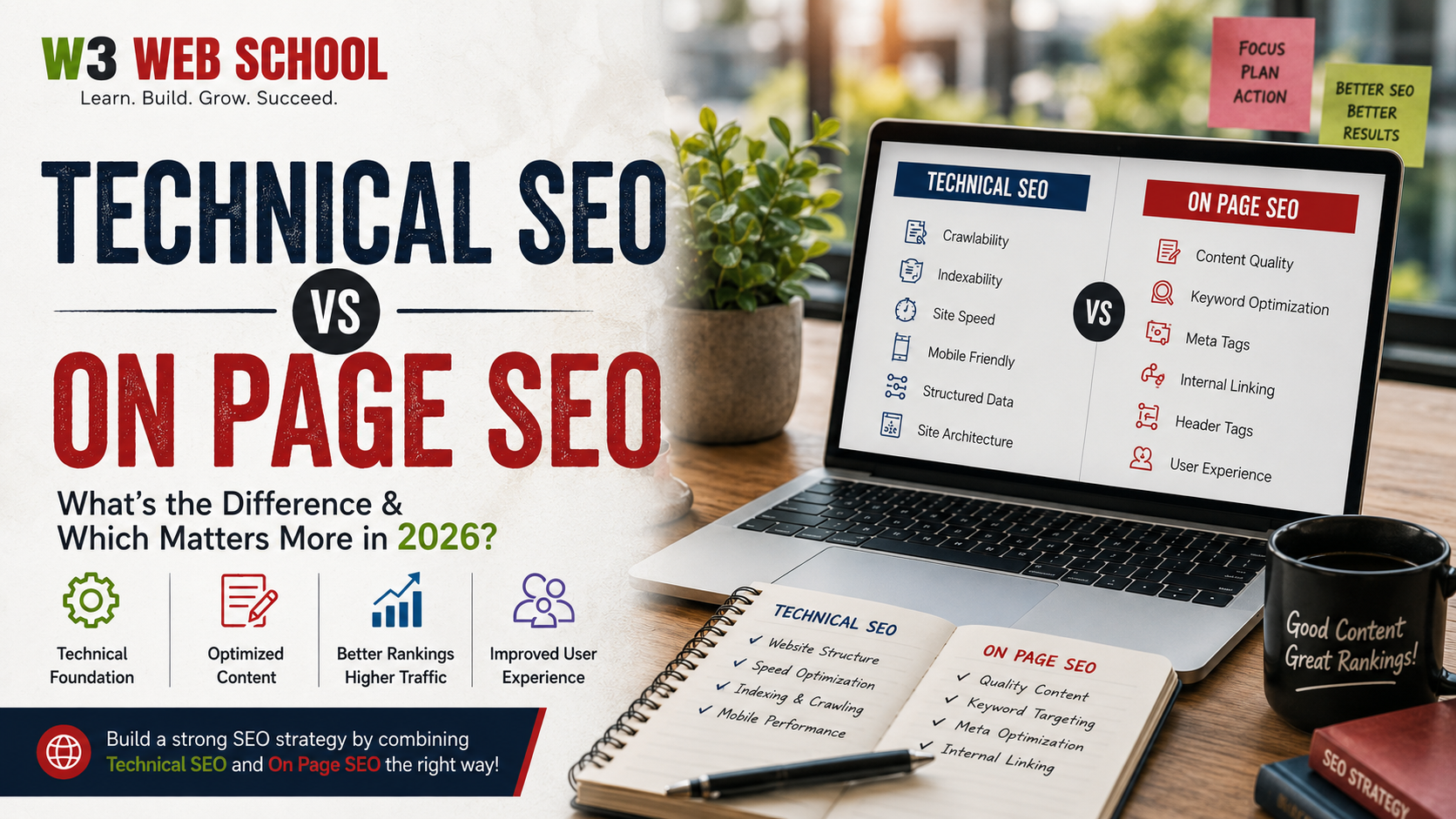
Module 5 | Technical SEO | |
Module 6 | Local SEO | |
Module 7 | E-commerce SEO | |
Module 8 | Content Marketing | |
Module 9 | Interview Preparation |
Download Full SEO Course Syllabus PDF
Module 1: Introduction to SEO and Importance
In Module 1, the course explores the basics of SEO, figuring out why it’s significant to success digitally.
The magical wand that transforms online visibility is known as search engine optimization or SEO. One can learn the fundamentals in this topic and get details of the importance of SEO in the broad world of the internet.
The major purpose is to set the framework for the SEO syllabus into the captivating world of the digital domain, from understanding search engine algorithms to embracing digital marketing literacy.
The topics included in this module:
- Concept of search engine
- What is SEO and its benefits?
- What is Keyword research?Â
- Types of SEO? On-page SEO, Off-Page SEO, and Technical SEO
- Types of SEO techniques?
- Google Algorithm updates
- SEO tools usage
Module 2: Keyword Research & Analysis
In the SEO course, keyword research is conducted to analyze and identify some specific words or phrases.
These are used by people when they search for vital information, services, or products on SERPs (search engine results pages) including Google and Bing.
These keywords are important. They act as the foundation for one’s content strategy. They explains search engines about the goal of web pages and allowing them to match content with relevant inquiries from users.
Through smart strategies and easy tools such as Google Keyword Planner, Ahrefs, Ubersuggest, and Keyword Magic Tool by SEMRUSH, one can learn the principles behind competitive research and accurate keyword analysis.
The Topics Included:Â
- Concept of Keyword
- Importance of Keyword research
- Types of Keywords
- Analysis of Keywords using paid and free tools
- Strategies for finding the ranking keywords of competitors
- Analysing the top-ranking keywords of own site
Module 3: On-Pages SEO
Module 3 introduces learners to the area of On-Page SEO, a major pillar of digital success in the vast landscape of digital marketing. This topic explores the details of optimizing individual web pages to get increased page visibility.Â
The On-page SEO course syllabus contains the following topics:
- Introduction to On-page SEO
- How to use and optimize Meta Title and Meta Description
- Demonstration of a user-friendly and hierarchical URL structureÂ
- Concept and application of Alt Tag, image optimization
- Usage of Header tags such as H1, H2, H3, and others which makes the content more organized and SEO-friendly
- How to check Keyword Density and proper application of it.
- What is Sitemap and how to generate it?
- A brief idea of Internal & external links and their application, usage limitation
- Brief introduction of Schema Markup
- Where and when to apply the Do Follow & No Follow link?Â
- Content Planning Strategy and content optimization
Module 4: Off-Pages SEO
Module 4 covers topics of Off-Page SEO which is a process of enhancing a website’s external elements to improve its online authority.
It adds to the SEO Course Syllabus by addressing strategies that are vital for improving ranks in SERPs and enhancing one’s overall online visibility, such as social media submissions, link building, and backlinking.Â
The Off-page SEO syllabus contains the following topics:
- Backlinks, link building, and implementation on web page
- What is anchor text and its usage
- How to build high-quality Do-follow backlinks
- Fundamentals of Social Media Submission
Module 5: Technical SEO
Module 5 discusses the key factors of technical SEO which is essential to optimize a website followed by making it free from any technical errors.
The following key topics are covered in the SEO Syllabus for the Technical SEO module.Â
- What is site structure optimization?
- What is Robots.txt and its application?
- Concept of Breadcrumbs
- Concept of Permalink and Permalink Optimization
- How to fix broken links and Errors
- How and why’s of canonicalization and structured data markup?
- How to Setup CDN?
- Fundamentals of using free Plugins
- Page Speed testÂ
- Site map creation and optimization of HTML and XML
Module 6: Local SEO
Module 6 offers a guide to Local SEO. This highlights the beneficial strategy for local businesses by making them more visible in local searches on Google.
Local businesses that have particular areas of serving or local physical addresses can get additional benefits by using the strategies and techniques of local SEO.
The topics covered in this module:
- A brief introduction to Local SEO and its significance
- Factors of local SEO
- Setting up Google My Business (GMB)
- Optimizing GMB listings
- Concept of citations and its significance in local GMB
Module 7: E-commerce SEO
Module 7 provides a brief guide to the fundamentals of E-commerce SEO which is essential in attracting organic traffic to businesses followed by improving search rankings and driving sales rates.
Some major topics to consider:Â
- Concept of e-commerce SEO
- How to do keyword research for products and Keyword research optimization?
- How to use high-quality product images?
- How to write unique descriptions for products?
- User ratings and reviews
Module 8: Content Marketing
A major aspect of the SEO Syllabus is content marketing, which focuses on producing and distributing beneficial and relevant to draw and retain the interest of the targeted audience while enhancing the ranking on search engines.
The topics covered in this module are as follows:Â
- Strategies for Content Creation
- Concept of BloggingÂ
- Do and Don’ts of Article Optimization
- A brief understanding of user engagement strategiesÂ
- How to write SEO-friendly content?
- Fundamentals of StorytellingÂ
- Creation of conversion-focused content strategy
Module 9: Interview Preparation
This is the last module of the SEO Course Syllabus. Here learners are offered training on the typical interview questions. Those are related to the above SEO topics, current industry trends, and efficient communication and negotiation skills.Â
The Topics Included:Â
- A list of typical Interview Questions
- Practical sessions of live business projects
- Industry-specific updated knowledge
- Effective presentation and communication skills
- Internship programs
SEO Course Duration and Fees
The SEO course usually ranges from 2 to 3 months. W3 Web School offers a 3-Months Advanced SEO Course, where you can learn from basics to advanced SEO topics. You can also get hands-on training on 3+ live projects, 10+ tools, and job assistance.Â
The SEO course fee generally ranges from ₹15,000 to ₹25000. At W3 Web School, we offer special discounts and an EMI payment facility to students.Â
Tools Covered in the SEO Course Syllabus
The top industry-led tools you can master by joining the SEO course offered by W3 Web School are mentioned below.
- SEMrush
- Ahrefs
- Ubersuggest
- Keyword Tool
- ChatGPT
- Screaming Frog
- QuillBot
- Quora
- WordPress
- MailChimp
Career Opportunities After SEO Course
Demand for SEO professionals is growing fast. According to the Digital World Institute, large companies offer more than 18% of total job postings for SEO professionals. Explore this high-paying career path. Let’s explore career options after the SEO course below.
- SEO Executive
- Local SEO Specialist
- SEO Analyst
- Technical SEO Manager
- Link-building Specialist
FAQs related to the SEO course syllabus
Q. Is coding required for SEO?
No, Coding is not required for the digital marketing course.
Q. What is the average course duration and fee?
The average duration for completing the SEO course successfully is about 6 to 8 weeks and the fee depends on the vast of topics the course contains.
Q. Is SEO and blogging similar?
No, blogging is a completely different topic related to generating informative content in different niches. In order to rank and retain those blogs on search engine pages, one must require potential SEO techniques.
Q. Can I get certification after completing the SEO course?
Yes, You can receive SEO certification after completing the necessary time frame and acquiring the SEO techniques.
Q. What are the various job opportunities I can get after the SEO course completion?
Though institutions do not offer direct job placements, but necessary job assistance to students once they complete their SEO course successfully.
The diverse range of job roles they can get includes SEO manager, SEO executive, Content writer, and content marketing manager.
Final Notes,
The vast and thorough SEO Course Syllabus mentioned above helps students or aspirants who want to flourish in their professional careers in the field of digital marketing. Set off on a captivating SEO journey where each topic leads to greater efficiency in the digital domain.Â
The SEO syllabus reveals the keys to achievement in the digital marketing world, from keyword research to generating engaging content and cracking interviews. Participate in the journey and let your online visibility do the cakewalk!