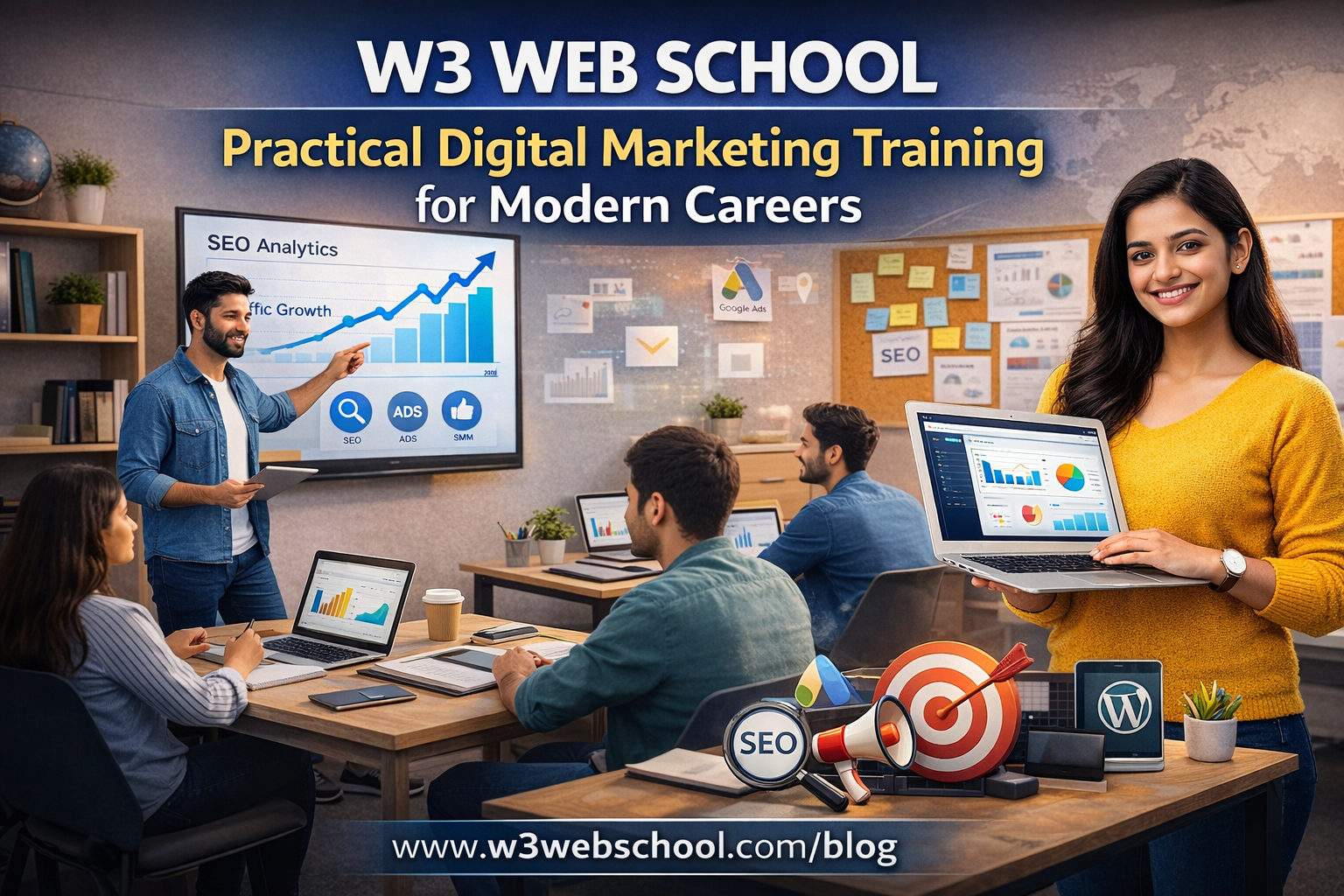
Digital marketing has become one of the fastest-growing career fields in the world. Businesses of all sizes now rely on online marketing to reach customers, generate leads, and build strong brands. Because of this rapid growth, the demand for skilled digital marketers continues to rise.
However, learning digital marketing effectively requires more than just theoretical knowledge. Students need hands-on experience, real tools, and practical training to succeed in the industry. This is where W3 Web School focuses its approach — helping students learn digital marketing through practical exposure and industry-relevant training.
Why Practical Learning Matters in Digital Marketing
Digital marketing is a field where practical implementation plays a crucial role. While concepts are important, employers often look for candidates who have real experience with tools, campaigns, and strategy execution.
Effective training should include:
Live project practice
Campaign management experience
Real digital marketing tools
Website optimization techniques
Analytics and performance tracking
Institutes that provide these elements help students understand how digital marketing works in real business scenarios rather than just learning theory.
Courses Designed for Industry Skills
Modern digital marketing training needs to cover a wide range of topics. At W3 Web School, students are introduced to multiple areas of digital marketing that are relevant in today’s job market.
Some of the key learning areas include:
Search Engine Optimization (SEO)
Social Media Marketing (SMM)
Google Ads and Performance Marketing
Content Marketing
WordPress Website Development
YouTube Marketing
Analytics and Data Tracking
These modules help learners understand both the technical and strategic sides of online marketing.
Learning with Real Digital Marketing Tools
One of the most important parts of digital marketing training is learning how to use industry tools. Professionals regularly use tools to manage campaigns, analyze data, and improve marketing performance.
Students in practical training environments typically get exposure to tools such as:
Google Analytics
Google Search Console
Keyword research tools
Social media management tools
Website optimization platforms
Understanding these tools helps learners develop job-ready skills that are useful in agencies, startups, and businesses.
The Importance of Mentorship and Guidance
Digital marketing can sometimes feel overwhelming for beginners because there are many different channels and strategies to learn.
Having mentors who guide students through real examples and case studies can make the learning process easier. Good mentorship helps students understand:
How marketing strategies are built
How campaigns are optimized
How businesses measure results
How marketers solve real problems
This kind of learning approach often improves confidence and prepares students for real work environments.
Career Opportunities in Digital Marketing
One of the reasons digital marketing courses have become so popular is the variety of career opportunities available in the field.
After developing the right skills, learners can explore roles such as:
SEO Specialist
Social Media Manager
Digital Marketing Executive
Performance Marketing Specialist
Content Marketer
Freelance Digital Marketer
Many professionals also use digital marketing skills to start freelancing, consulting, or building their own online businesses.
Adapting to the Future of Digital Marketing
The digital marketing landscape changes constantly as new technologies and tools emerge. Artificial intelligence, automation tools, and advanced analytics are now becoming part of everyday marketing strategies.
Training programs that update their curriculum regularly help students stay aligned with these industry trends. Learning about modern marketing tools, automation platforms, and AI-assisted strategies can give students a strong advantage in the job market.
Final Thoughts
Choosing the right place to learn digital marketing can significantly influence a student’s career path. Practical learning, experienced mentorship, and exposure to real tools are key factors that help students build confidence and develop industry-ready skills.
Institutes like W3 Web School aim to provide a learning environment where students can understand both the fundamentals and the practical side of digital marketing.
For individuals who want to explore career opportunities in the digital marketing field, structured training combined with practical experience can be an important step toward professional growth.