A modern digital marketing course syllabus typically includes SEO, Google Ads, Meta Ads, Social Media Marketing, Content Marketing, Email Marketing, Google Analytics 4 (GA4), WordPress, AI tools, marketing automation, live projects and portfolio development. The exact curriculum may vary depending on the institute, but practical training is an important part of most updated programmes.
Digital Marketing Course Syllabus (2026): Complete Modules, AI Tools & Career Skills
Planning to learn digital marketing but unsure what you'll actually study? This complete guide explains the latest Digital Marketing Course Syllabus (2026), including every module, AI tools, live projects, practical assignments, certifications and job-ready skills that leading institutes teach. Whether you're a student, fresher, working professional or business owner, this guide will help you understand what to expect before enrolling in a digital marketing course.

18+ Industry Modules
Learn SEO, Google Ads, Meta Ads, AI Marketing, Analytics, Email Marketing, Content Marketing and more.
40+ Industry Tools
Explore hands-on tools including Google Analytics 4, Search Console, ChatGPT, Gemini, Canva, WordPress and modern platforms.
Live Projects & Portfolio
Understand how practical assignments and real-world projects help you build confidence and prepare for job interviews.
Career-Ready Skills
See how each module contributes to roles such as SEO Executive, Performance Marketer, Digital Marketing Executive and Freelancer.
A digital marketing course is much more than learning how to run advertisements or post on social media. Today's employers expect professionals who can plan marketing strategies, optimise websites for search engines, analyse campaign performance, create high-quality content and use AI tools to improve productivity.
That's why the Digital Marketing Course Syllabus (2026) has evolved significantly. Modern training now combines marketing fundamentals with practical projects, industry-standard tools and AI-assisted workflows to prepare students for real business challenges.
In this guide, you'll explore every module, industry tools, live projects, practical skills, career opportunities and AI topics included in a modern Digital Marketing Course Syllabus. Whether you're comparing institutes or planning your first marketing career, this guide will help you understand what to expect before joining a course.
Whether you're comparing institutes, planning your first digital marketing course or upgrading your skills, this guide will help you evaluate a syllabus based on practical learning rather than marketing claims.
Table of Contents
What You'll Learn in This Guide
- Complete Digital Marketing Course Syllabus (2026)
- Detailed module-by-module explanation
- Latest AI tools included in modern courses
- Industry-standard software used by agencies
- Live projects and hands-on assignments
- Career opportunities after completing modules
- Certifications that add value to your resume
- Tips to choose the right course syllabus
Looking for practical training based on this syllabus? Explore our Digital Marketing Course in Kolkata to see how these modules are taught through live projects, mentor guidance, industry tools and hands-on assignments.
Complete Digital Marketing Course Syllabus (2026)
A modern digital marketing course should help students develop practical skills instead of only teaching theoretical concepts. Every module in the syllabus should have a clear purpose, introduce industry-standard tools, include hands-on practice and prepare learners for real-world marketing challenges.
The syllabus below is structured to reflect the exact skills expected by businesses, agencies and startups in 2026. From marketing fundamentals to AI-powered workflows, each module contributes to building a complete digital marketing skill set.
Whether your goal is getting a job, starting freelancing, growing a business or switching careers, understanding how these modules connect will help you choose a course that matches your learning objectives.
Complete Digital Marketing Course Syllabus Overview
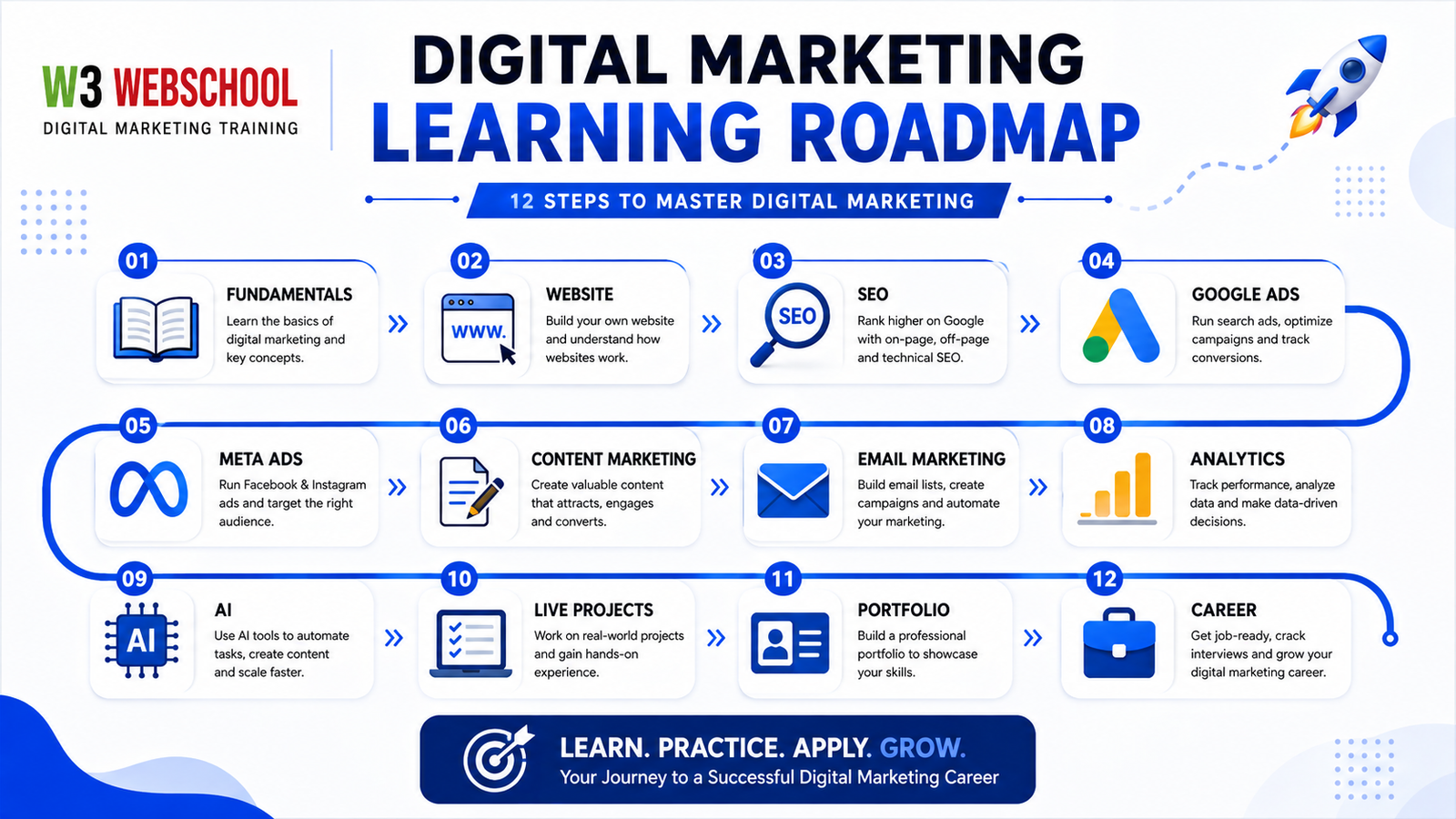
| Module | Key Skills You'll Learn | Industry Tools | Practical Project | Career Outcome |
|---|---|---|---|---|
| Digital Marketing Fundamentals | Marketing concepts, customer journey, funnels | Google Trends, ChatGPT | Digital Marketing Strategy | Marketing Executive |
| Website Planning & WordPress | Website creation, landing pages, blogging | WordPress, Elementor | Business Website | Website Administrator |
| Search Engine Optimization (SEO) | Keyword research, on-page SEO, technical SEO, local SEO | Google Search Console, GA4, Ahrefs, Semrush | Complete SEO Audit | SEO Executive |
| Google Ads (PPC) | Search Ads, Display Ads, conversion tracking | Google Ads, Keyword Planner | Search Campaign | PPC Executive |
| Meta Ads | Facebook & Instagram advertising, remarketing | Meta Ads Manager | Lead Generation Campaign | Performance Marketing Executive |
| Social Media Marketing | Content strategy, branding, engagement | Meta Business Suite, Canva | Monthly Social Media Plan | Social Media Executive |
| Content Marketing | SEO writing, blogging, content strategy | ChatGPT, Grammarly | SEO Blog Project | Content Writer |
| Email Marketing | Email campaigns, automation | Mailchimp, Brevo | Email Funnel | Email Marketing Executive |
| Google Analytics 4 | Traffic analysis, reports, conversions | GA4, Looker Studio | Analytics Dashboard | Web Analytics Executive |
| YouTube Marketing | Video SEO, channel growth | YouTube Studio | Channel Optimisation | YouTube Marketing Specialist |
| AI in Digital Marketing | AI content, prompts, automation | ChatGPT, Gemini, Claude, NotebookLM | AI Marketing Workflow | AI Digital Marketing Specialist |
| Freelancing & Portfolio | Client communication, proposals, personal branding | LinkedIn, Upwork | Portfolio Website | Freelancer / Consultant |
What Makes This Syllabus Different?
Many digital marketing institutes still focus on traditional classroom teaching and outdated topics. A modern syllabus should prepare students for the way digital marketing teams actually work today.
The syllabus above is designed around four key learning outcomes:
Practical Learning
Every module includes practical assignments, real client case studies, and hands-on exercises instead of only theoretical lectures.
Industry Tools
Gain real experience with tools used by top agencies every day, including Google Analytics 4, Search Console, Google Ads, Meta Ads Manager and AI productivity platforms.
AI-Integrated Learning
Modern marketers rely on AI for research, content planning, campaign optimisation and workflow automation. Our syllabus introduces these tools responsibly alongside core principles.
Career Preparation
Learning leads directly to measurable outcomes such as portfolio development, mock interview practice, and the confidence to execute real client work.
Skills You'll Build Throughout This Syllabus
By completing all modules, learners gradually develop essential job-ready competencies:
- Planning end-to-end digital marketing strategies.
- Building and managing responsive WordPress websites.
- Improving organic search engine visibility through SEO.
- Planning and running high-converting paid advertising campaigns.
- Creating search-optimized and engaging content.
- Analysing site traffic and user behavior via Google Analytics 4.
- Managing organic and paid social media growth strategies.
- Using modern AI tools to scale overall team productivity.
- Creating client-ready marketing performance reports and dashboards.
- Building a verified professional portfolio for hiring interviews.
Expert Insight
A good digital marketing syllabus is not measured by the number of modules alone. The real value lies in how those modules connect through practical implementation, live projects and continuous skill development. Before enrolling in any course, check whether the curriculum reflects current industry practices, includes updated tools and provides opportunities to apply what you learn.
Looking for practical training based on these modules? Explore our Digital Marketing Course in Kolkata to understand how the complete syllabus is taught through live projects, mentor guidance and real-world assignments.
Module 3 — Search Engine Optimization (SEO)
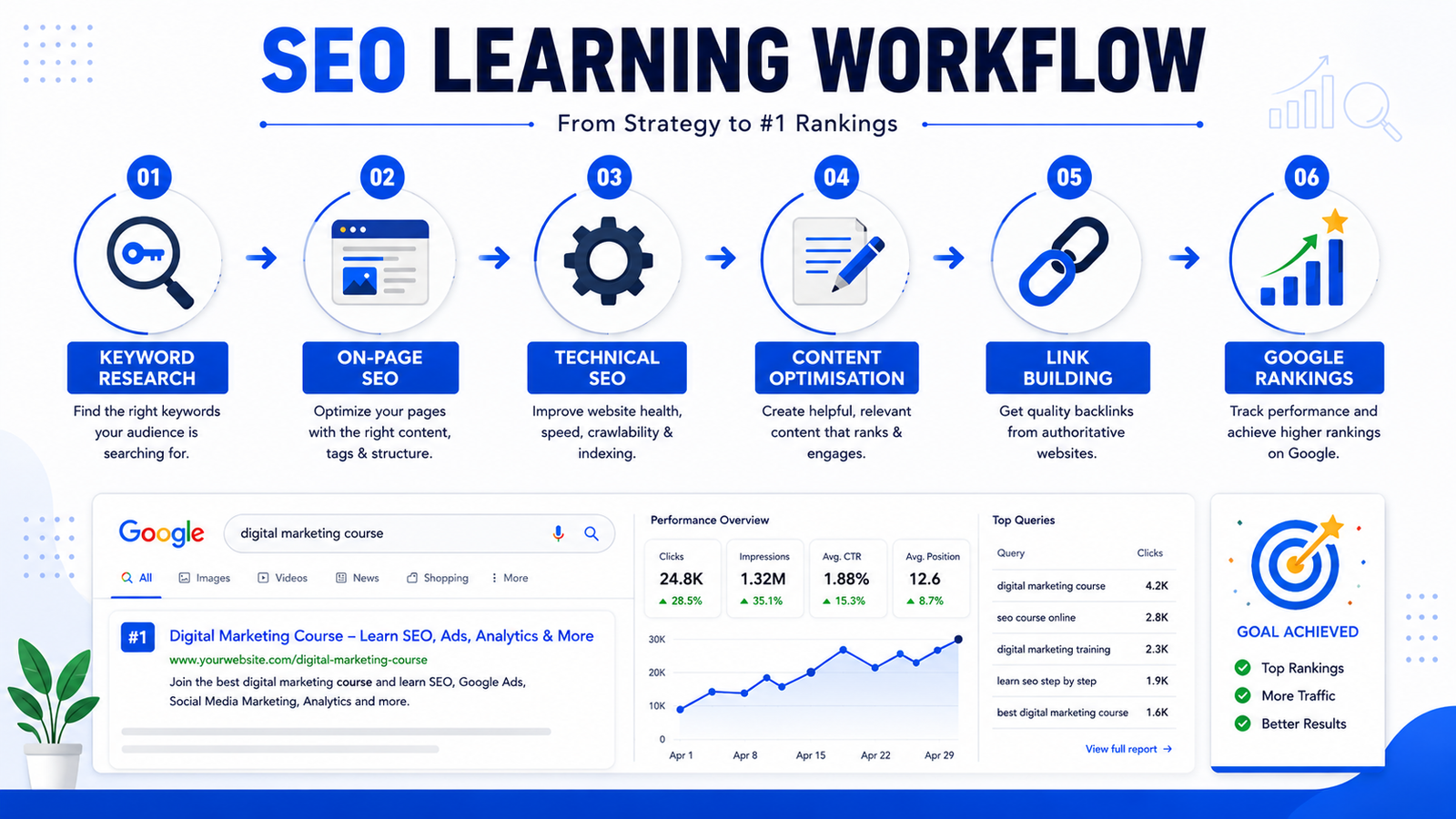
Search Engine Optimization (SEO) is one of the most valuable skills in digital marketing because it helps businesses attract organic traffic from search engines without paying for every click. A strong understanding of SEO enables marketers to improve website visibility, generate qualified leads and build long-term online growth.
This module introduces both the fundamentals and practical implementation of SEO, covering everything from keyword research to technical SEO optimisation and local SEO.
Why SEO Is One of the Most Valuable Digital Marketing Skills
Search Engine Optimization is often considered one of the most sustainable digital marketing skills because it helps businesses attract organic traffic without paying for every visitor. Whether it's a local business, an e-commerce store or a service provider, strong SEO practices can improve online visibility and generate consistent long-term results. That's why SEO remains a core part of almost every modern digital marketing strategy.
What You'll Learn
During this module, you'll learn how to master key organic search strategies:
- Understand how Google search algorithms rank web pages.
- Perform keyword research based on user search intent.
- Optimise page titles, meta descriptions, headings, and content.
- Improve website structure and internal linking strategies.
- Optimise images, core web vitals, and mobile page speed.
- Understand Technical SEO fundamentals like canonicals and XML sitemaps.
- Create an effective Local SEO strategy using Google Business Profile.
- Build high-quality backlinks through ethical off-page SEO techniques.
- Measure SEO performance using essential web analytics tools.
Real Industry Example
Consider a coaching institute in Kolkata that wants to appear when students search for terms like "digital marketing course in Kolkata." Before publishing content, the marketing team researches search intent, identifies relevant keywords, improves page structure and creates helpful content. Over time, these efforts help increase organic visibility and attract visitors who are actively looking for that service. This practical workflow reflects how SEO is applied in real business environments.
Industry Standard SEO Tools
Master industry-standard SEO platforms used by agencies worldwide:
Search Console
Index monitoring, sitemaps, and search performance tracking.
Google Analytics 4
Organic user behavior, traffic analysis, and goal conversion tracking.
Keyword Planner
Discover search volume, keyword trends, and commercial intent.
Ahrefs / Semrush
Competitor analysis, keyword difficulty, and backlink auditing.
Screaming Frog
Technical SEO site audits, broken links, and crawl analysis.
Common Beginner Mistakes
- Targeting keywords without understanding search intent.
- Publishing content without proper heading structure.
- Ignoring technical SEO issues such as page speed and indexing.
- Expecting immediate rankings after publishing content.
- Focusing only on keywords instead of creating genuinely helpful content.
Practical Assignment & Audit Project
Hands-on SEO Project
Students gain practical experience by performing a complete on-page SEO audit of a live website. You will:
- Identify and fix broken links, missing meta tags, and technical crawl errors.
- Optimise a core service page for target transactional keywords.
- Write and publish an SEO-friendly blog article targeting specific long-tail queries.
Where Businesses Use SEO
SEO is widely used across different industries to improve online visibility and attract qualified visitors through search engines. Common examples include:
- Educational institutes targeting student enquiries.
- E-commerce websites increasing product visibility.
- Healthcare clinics attracting local patients.
- Real estate companies generating property leads.
- Restaurants and local businesses improving local search presence.
Career Opportunities
Mastering Search Engine Optimization opens up several dedicated career paths:
- SEO Executive
- SEO Analyst / Strategist
- Organic Growth Executive
- Content SEO Specialist
Additionally, strong SEO knowledge significantly strengthens your capabilities in content marketing, website optimization, and organic lead generation.
Expert Insight
One of the biggest lessons experienced SEO professionals learn is that rankings improve when content genuinely solves users' problems. While keyword research and technical optimisation remain important, understanding search intent and creating useful, well-structured content often makes the biggest difference over the long term.
If you want to specialise in organic search, technical SEO and live website optimisation, you can also explore our SEO Course in Kolkata for dedicated practical training.
Module 4 — Google Ads (Pay-Per-Click Advertising)
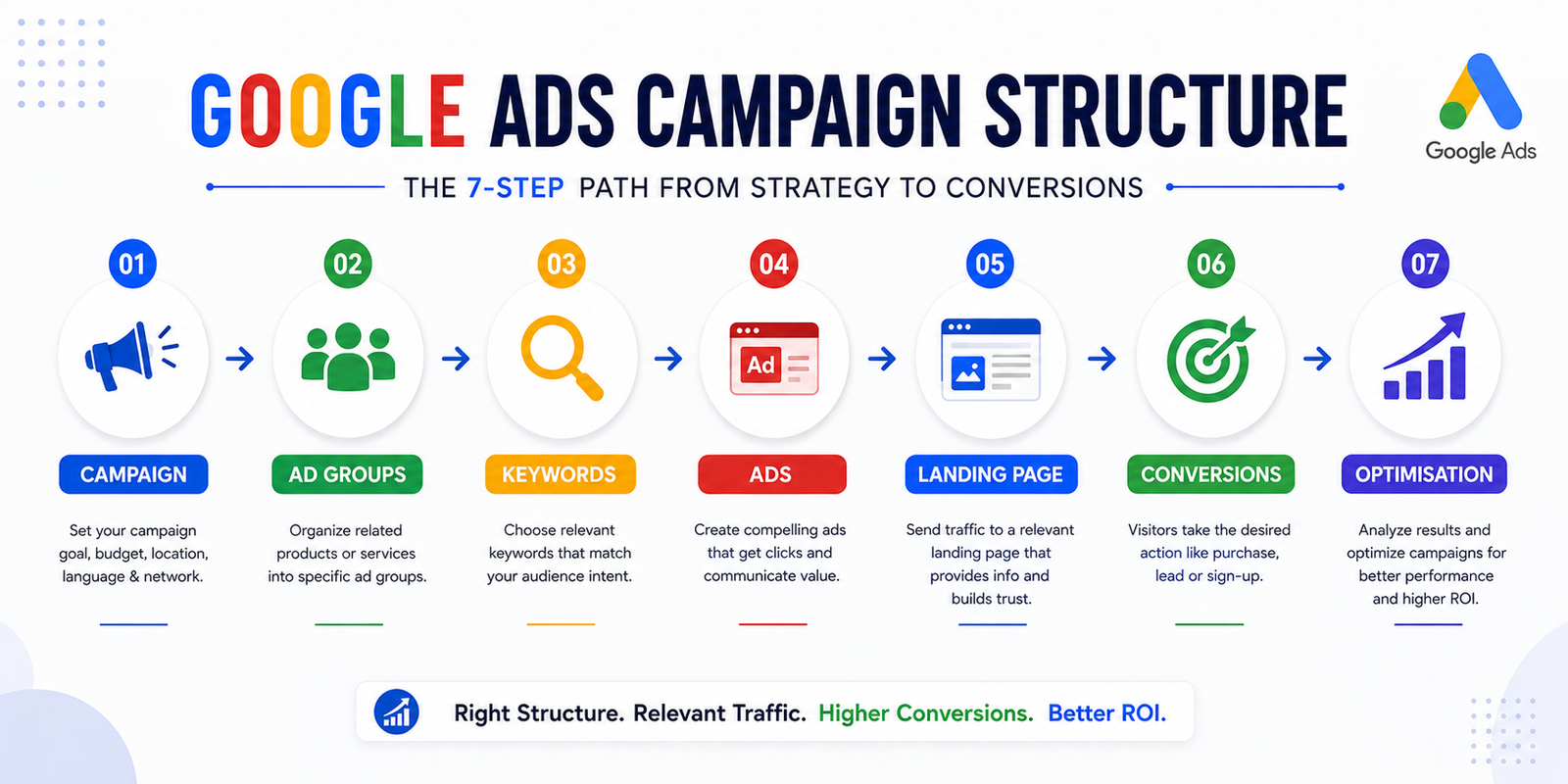
Google Ads is one of the fastest ways to generate targeted website traffic, business enquiries, and sales. Unlike SEO, which takes time to build organic visibility, Google Ads allows businesses to appear at the top of search engine results almost immediately through strategic paid advertising.
In this module, you'll learn how to create, manage, and optimise performance advertising campaigns that reach the right audience while making efficient use of marketing budgets.
Why Google Ads Is an Important Skill
While SEO helps businesses build long-term organic visibility, Google Ads allows them to reach potential customers almost immediately. Businesses use paid search campaigns to promote products, generate enquiries and drive targeted traffic from people who are already searching for specific services. Understanding how Google Ads works is therefore an important skill for anyone planning a career in digital marketing.
What You'll Learn
This module covers the essential concepts and practical skills required to run successful PPC campaigns, including:
- Understanding the complete Google Ads ecosystem.
- Advanced keyword research for paid search campaigns.
- Setting up Search Ads, Display Ads, and Performance Max campaigns.
- Structuring campaign architecture and granular ad groups.
- Writing high-converting responsive ad copy.
- Master audience targeting, remarketing, and automated bidding strategies.
- Configuring exact conversion tracking for measurement.
- Daily budget planning, bidding caps, and performance optimisation.
- Maximising Quality Score and optimizing Ad Rank.
- Building professional paid media performance reports.
Real Industry Example
Imagine a training institute launching a new batch for its digital marketing course. Instead of waiting for organic rankings, the marketing team creates a Google Search campaign targeting keywords such as "digital marketing course in Kolkata." By writing relevant ad copy, selecting the right audience and directing visitors to a well-optimised landing page, the institute can start receiving enquiries much faster. This is a practical example of how Google Ads supports business growth.
Industry Standard Tools You'll Learn
Gain hands-on proficiency with essential advertising and tracking software:
Google Ads
Official dashboard for paid search and display campaign creation.
Keyword Planner
Researching commercial search volume and estimated CPC bids.
Google Tag Manager
Setting up custom event tags and conversion tracking triggers.
GA4
Analyzing paid traffic user pathways and bounce rates.
Looker Studio
Building automated, client-facing PPC reporting dashboards.
Common Beginner Mistakes
- Choosing broad keywords without understanding search intent.
- Sending ad traffic to an unrelated or poorly optimised landing page.
- Ignoring conversion tracking before launching campaigns.
- Running campaigns without monitoring performance regularly.
- Increasing budget without first improving campaign quality.
Practical Assignment & Campaign Setup
Hands-on Search Campaign Project
Students build and launch a complete Search Campaign step-by-step. Practical tasks include:
- Performing keyword research to identify high-intent commercial search queries.
- Writing compelling responsive search ads (RSAs) with dynamic extensions.
- Setting up daily campaign budgets, location targeting, and match types.
- Integrating conversion tags and monitoring campaign cost-per-acquisition (CPA).
Where Businesses Use Google Ads
Google Ads is used across many industries to generate qualified leads and sales. Some common examples include:
- Educational institutes promoting new admissions.
- Local service providers attracting nearby customers.
- E-commerce stores advertising products.
- Healthcare clinics generating appointment enquiries.
- Real estate companies promoting new projects.
Career Opportunities
Mastering Google Ads prepares learners for lucrative performance marketing job roles:
- PPC Executive
- Google Ads Specialist
- Performance Marketing Executive
- Paid Media Strategist
These PPC skills are highly valued across advertising agencies, e-commerce brands, tech startups, and high-growth businesses running online ad campaigns.
Expert Insight
Running Google Ads successfully isn't about spending more money—it's about understanding search intent, selecting targeted keywords, crafting relevant ad copy, and continuously optimizing campaigns based on conversion data. Marketers who systematically audit performance metrics and improve Quality Score consistently achieve a lower cost per lead and higher ROI. Successful Google Ads campaigns are not driven by budget alone. Campaign structure, keyword relevance, landing page quality and continuous optimisation usually have a much greater impact on long-term performance than simply increasing ad spend.
Want to master Google Ads, PPC strategies, and live paid campaign management with 100% practical training? Explore our Digital Marketing Course in Kolkata to gain hands-on experience under expert mentorship.
Module 10 — AI in Digital Marketing
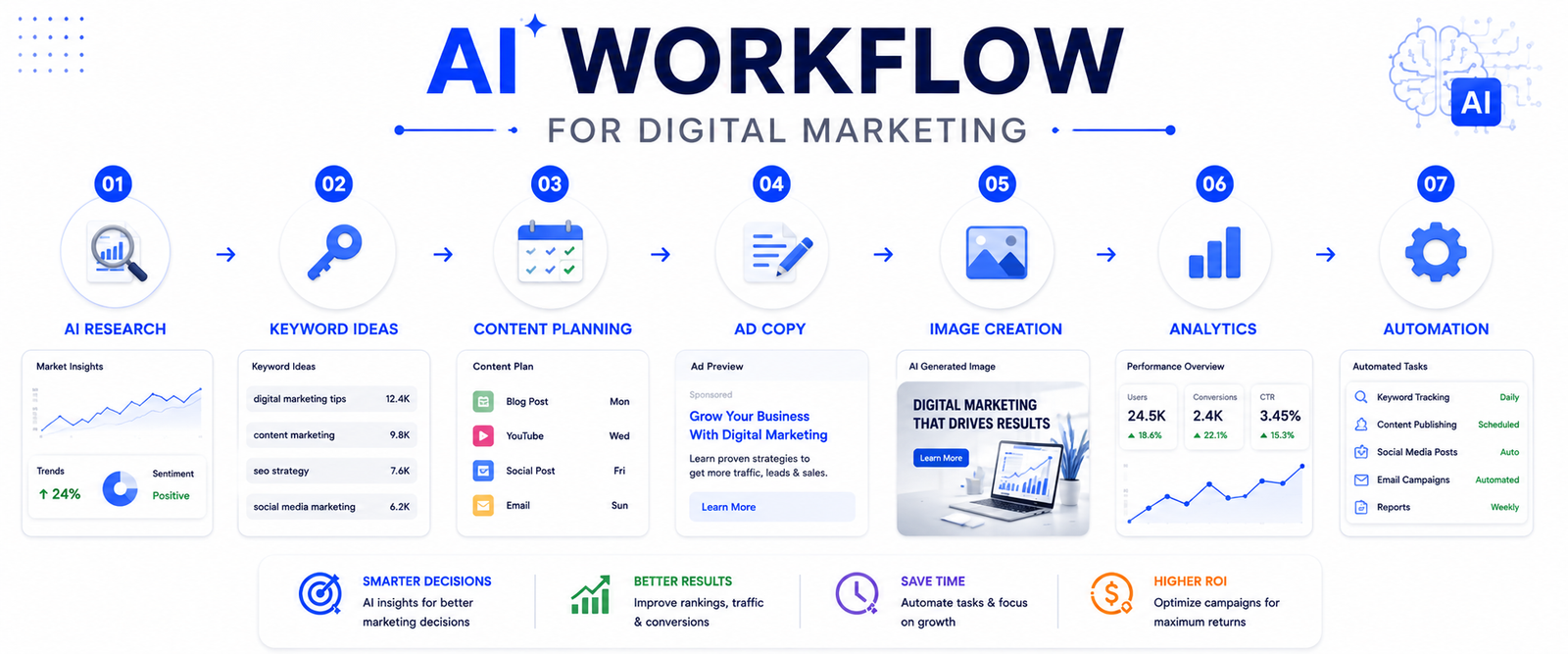
Artificial Intelligence (AI) is transforming the way digital marketers research keywords, create content, optimise ad campaigns, and analyse performance data. Today, digital agencies, startups, and enterprises leverage AI-powered marketing tools to boost productivity, automate repetitive workflows, and make faster, data-driven decisions.
However, AI is most powerful when combined with human creativity, critical thinking, and core strategic principles. This module introduces practical applications of AI in digital marketing, helping learners accelerate execution while preserving content quality, brand tone, and original strategy.
Why AI Is Becoming an Important Marketing Skill
AI has become a valuable productivity tool in digital marketing, helping professionals complete routine tasks more efficiently. From content research and keyword clustering to campaign planning and data analysis, AI can save time and improve workflows. However, successful marketers still rely on human judgement, creativity and strategic thinking to make informed decisions and deliver meaningful results.
What You'll Learn
This module focuses on real-world, industry-tested AI tools and prompt workflows:
- Fundamentals of Artificial Intelligence in Digital Marketing.
- Executing AI-powered keyword research and intent mapping.
- Dynamic AI content planning and topic research techniques.
- Advanced prompt engineering fundamentals for marketers.
- Creating AI-assisted SEO content and article outlines.
- Generating social media posts, captions, and reel scripts with AI.
- Core concepts of AI image generation for ad visual design.
- Leveraging AI for Google Ads and Meta Ads optimization.
- Streamlining AI-based email marketing sequences and copy.
- AI productivity hacks and marketing workflow automation.
- Principles of AI ethics, copyright compliance, and responsible usage.
Real Industry Example
Imagine you're planning a blog on "Digital Marketing Course Syllabus." Instead of starting with a blank page, AI can help organise topic ideas, suggest related questions and identify supporting keywords. The marketer then reviews the information, verifies facts, adds personal insights and creates original content that genuinely helps readers. This combination of AI assistance and human expertise reflects how many professionals work today.
Industry Standard Tools You'll Learn
Master leading generative AI models and intelligent marketing platforms:
ChatGPT
Advanced content research, copywriting, and campaign ideation.
Google Gemini
Real-time web research, multi-modal analysis, and strategy drafting.
Claude
Long-form editorial content writing, detailed tone styling, and document analysis.
NotebookLM
Grounded source research, document synthesis, and insight summaries.
Canva AI
AI-assisted graphic generation, visual editing, and creative magic tools.
Perplexity AI
Factual research discovery and cited topic validation.
Where AI Helps — And Where It Doesn't
AI Can Help With
- Keyword and topic research
- Content outlines and brainstorming
- Ad copy ideas
- Basic data analysis
- Productivity and workflow automation
Human Skills Are Still Essential For
- Marketing strategy
- Understanding customer behaviour
- Creative storytelling
- Brand communication
- Final content review and quality control
Practical Assignment & AI Project Workflow
Hands-on AI Marketing Campaign Project
Students complete a full-cycle, AI-assisted marketing project balancing smart tools with human strategic review. Tasks include:
- Performing deep niche and audience persona research using generative AI tools.
- Generating high-intent keyword opportunities and structured editorial outlines.
- Drafting SEO-friendly web copy and refining outputs through human editing and fact-checking.
- Designing promotional social media assets and crafting a complete campaign framework.
- Auditing AI outputs for originality, accuracy, and search compliance.
Practical AI Exercise
Choose a marketing topic and use an AI tool to generate an initial content outline. Review the output, verify the information, improve the structure, add original insights and rewrite sections where needed. This exercise helps students understand that AI works best as a support tool rather than a replacement for critical thinking.
Career Opportunities
Combining core marketing skills with AI proficiency unlocks modern growth and executive roles:
- AI Digital Marketing Executive
- SEO Executive
- Content Marketing Specialist
- Performance Marketing Executive
- Marketing Automation Executive
- Growth Marketing Executive
- Freelance Digital Marketer
Marketers who master both core strategic principles and AI-driven efficiency are among the most sought-after professionals in the modern hiring market.
Expert Insight
AI should be viewed as a high-speed productivity assistant rather than a full replacement for human marketing expertise. High-performing marketers use AI tools to accelerate research, organize ideas, and automate repetitive tasks, while relying on personal judgment to deliver trustworthy, audience-focused campaigns. Strategic domain knowledge, understanding user intent, and business goal alignment remain indispensable. Experienced marketers use AI to improve efficiency, not to replace expertise. The strongest results usually come from combining AI-assisted workflows with practical knowledge, careful editing and a clear understanding of user intent.
Ready to supercharge your career with AI-powered marketing techniques, advanced search engine strategies, and live client projects? Explore our Digital Marketing Course in Kolkata to master modern digital skills under expert guidance.
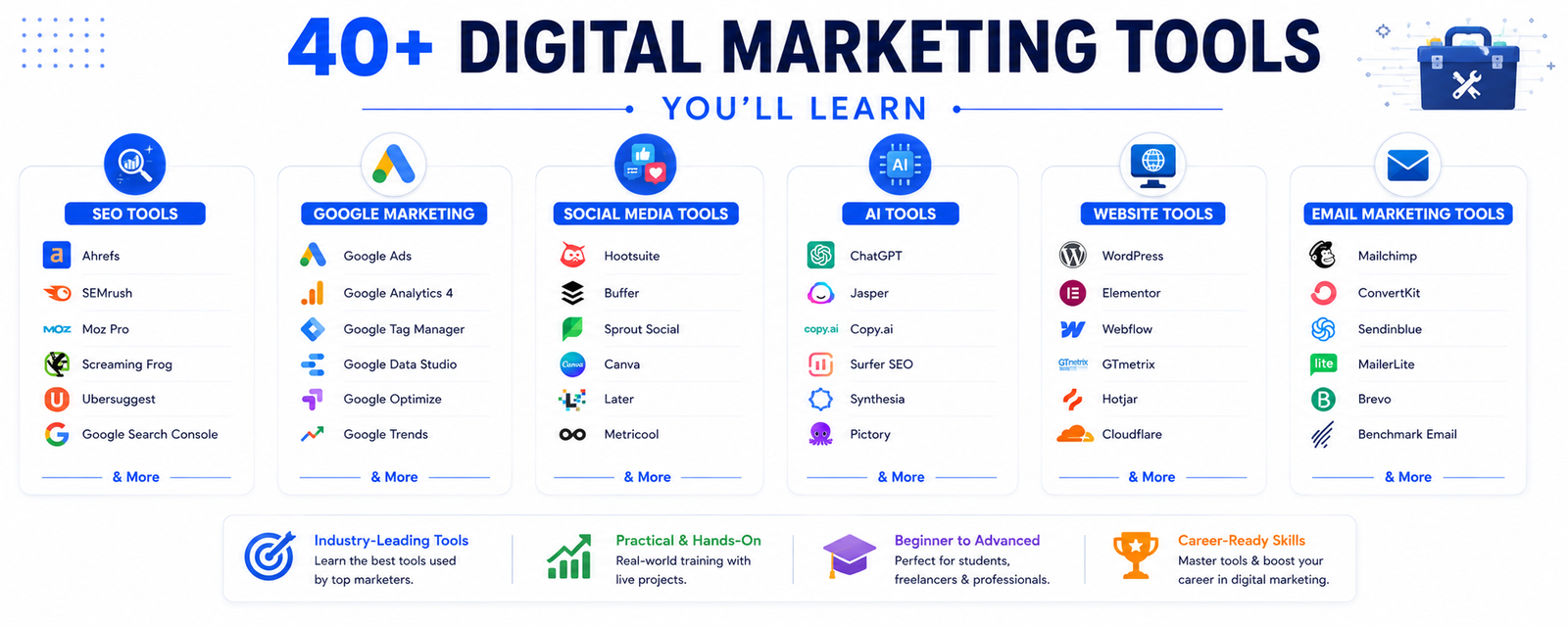
40+ Digital Marketing Tools You'll Learn During the Course
SEO & Website Optimisation
Google Search Console
Website indexing, crawl error diagnostic, and organic performance monitoring.
Google Keyword Planner
Search volume discovery and pay-per-click keyword research.
Google Trends
Search interest tracking and real-time market trend analysis.
Ahrefs
Backlink auditing, link building metrics, and competitor analysis.
Semrush
Comprehensive SEO audits, rank tracking, and competitor keyword research.
Screaming Frog
Technical SEO crawling, broken link identification, and site architecture checks.
Website & Landing Page Tools
WordPress
Content management system (CMS) setup, management, and blogging.
Elementor
Drag-and-drop visual landing page building and conversion design.
Rank Math SEO
On-page SEO optimization, schema markup, and sitemap generation.
LiteSpeed Cache
Website performance acceleration, image optimization, and caching.
Google Marketing Tools
Google Ads
Creating and scaling PPC search, display, and video campaigns.
Google Analytics 4 (GA4)
Web analytics, user behavior tracking, and multi-channel attribution.
Google Tag Manager
Event tracking deployment, pixel setup, and code container control.
Looker Studio
Building interactive cross-platform marketing dashboards and reports.
Meta & Social Media Tools
Meta Ads Manager
Targeted paid campaign setup across Facebook and Instagram.
Meta Business Suite
Centralized social media posting, inbox management, and insights.
Canva
Designing social post graphics, ad banners, and promotional content.
Buffer
Automated social media scheduling and content publishing.
AI & Productivity Tools
ChatGPT
Content planning, prompt execution, and copy drafting.
Google Gemini
Real-time market research, idea expansion, and live web query analysis.
Claude
Detailed long-form content generation and structured editing.
NotebookLM
Research organization and source-grounded documentation synthesis.
Perplexity AI
Factual research discovery and instant cited web search.
Canva AI
Smart image generation, object removal, and automated creative design.
Email Marketing Tools
Mailchimp
Email marketing automation, list segmentation, and campaign tracking.
Brevo
Omnichannel transactional emails, SMS marketing, and automation workflows.
MailerLite
Newsletter design, subscriber list growth, and landing page creation.
Collaboration & Productivity
Google Docs
Real-time collaborative content writing and editorial feedback.
Google Sheets
Campaign planning, keyword tracking, and performance data sheets.
Google Drive
Secure cloud asset storage and media file organization.
Trello
Kanban project management and task delegation for team projects.
Notion
Centralized content strategy wikis, roadmaps, and documentation.
Expert Insight
While marketing software continually evolves, mastering core strategic frameworks alongside current tools ensures long-term career adaptability. Focus on understanding the primary objective, user behavior metrics, and underlying logic behind each platform rather than just memorizing dynamic user interfaces.
Live Projects You'll Work On During a Digital Marketing Course
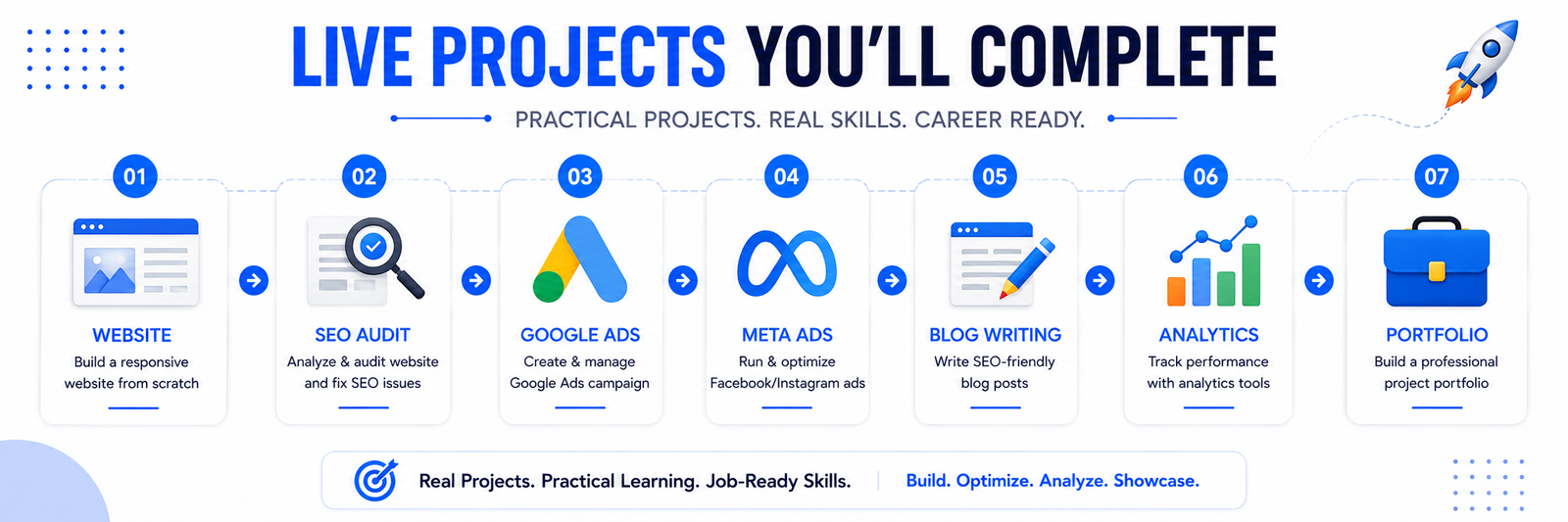
Why Live Projects Are Important
Learning digital marketing becomes much more effective when concepts are applied in real situations. Live projects give students an opportunity to work on practical tasks such as website optimisation, content creation, SEO implementation and campaign management. This hands-on experience helps bridge the gap between classroom learning and the expectations of employers or clients.
Real Industry Example
Imagine a local business wants to improve its online visibility. Instead of working on a sample exercise, students analyse the website, identify SEO opportunities, optimise important pages, prepare content recommendations and review performance using analytics tools. This practical workflow reflects the type of work digital marketers commonly perform on real projects.
Live Projects Included
| Live Project | Skills You'll Practice | Industry Tools |
|---|---|---|
| Business Website Creation | Website Planning, UX, WordPress | WordPressElementor |
| SEO Website Audit | On-Page & Technical SEO | Search ConsoleScreaming Frog |
| Keyword Research Project | Search Intent Analysis | Keyword PlannerAhrefs |
| Google Ads Campaign | PPC Strategy & Optimisation | Google Ads |
| Meta Lead Generation Campaign | Audience Targeting | Meta Ads Manager |
| SEO Blog Writing | Content Marketing | ChatGPTGrammarly |
| Social Media Content Calendar | Content Planning | CanvaMeta Business Suite |
| Email Marketing Campaign | Automation & Segmentation | Mailchimp |
| Google Analytics Dashboard | Data Analysis | GA4Looker Studio |
| Complete Digital Marketing Strategy | End-to-End Campaign Planning | Multiple Industry Tools |
Skills You Build During Live Projects
Working on live projects helps develop practical skills that are difficult to gain through theory alone, including:
- Planning digital marketing activities.
- Solving real website and campaign challenges.
- Using professional marketing tools confidently.
- Analysing performance and making improvements.
- Presenting completed work in a professional portfolio.
Portfolio You'll Build
A responsive WordPress website
SEO audit report
Keyword research document
Published SEO blog article
Google Ads campaign structure
Meta Ads campaign plan
30-day social media content calendar
Email marketing workflow
Google Analytics performance dashboard
Complete digital marketing strategy presentation
What Employers Usually Expect
While hiring freshers, many employers look beyond certificates. They often prefer candidates who can explain how they approached a project, the tools they used, the challenges they faced and the improvements they suggested. Practical project experience demonstrates problem-solving ability and makes interview discussions more meaningful.
Industry Experience You'll Gain
Instead of learning isolated tools, students experience how different marketing activities connect together in real agencies:
Website SEO Content Google Ads Social Media Email Marketing Analytics Optimisation
Expert Insight
A certificate alone rarely impresses recruiters. Demonstrating practical work through live projects and a well-organised portfolio often has a greater impact during interviews. When evaluating a digital marketing course, always check whether the syllabus includes meaningful project work rather than only classroom lectures. Completing a project is only one part of the learning process. The real value comes from understanding why a particular strategy was chosen, what results were observed and how future improvements can be made. This habit of analysing outcomes is what gradually builds professional confidence.
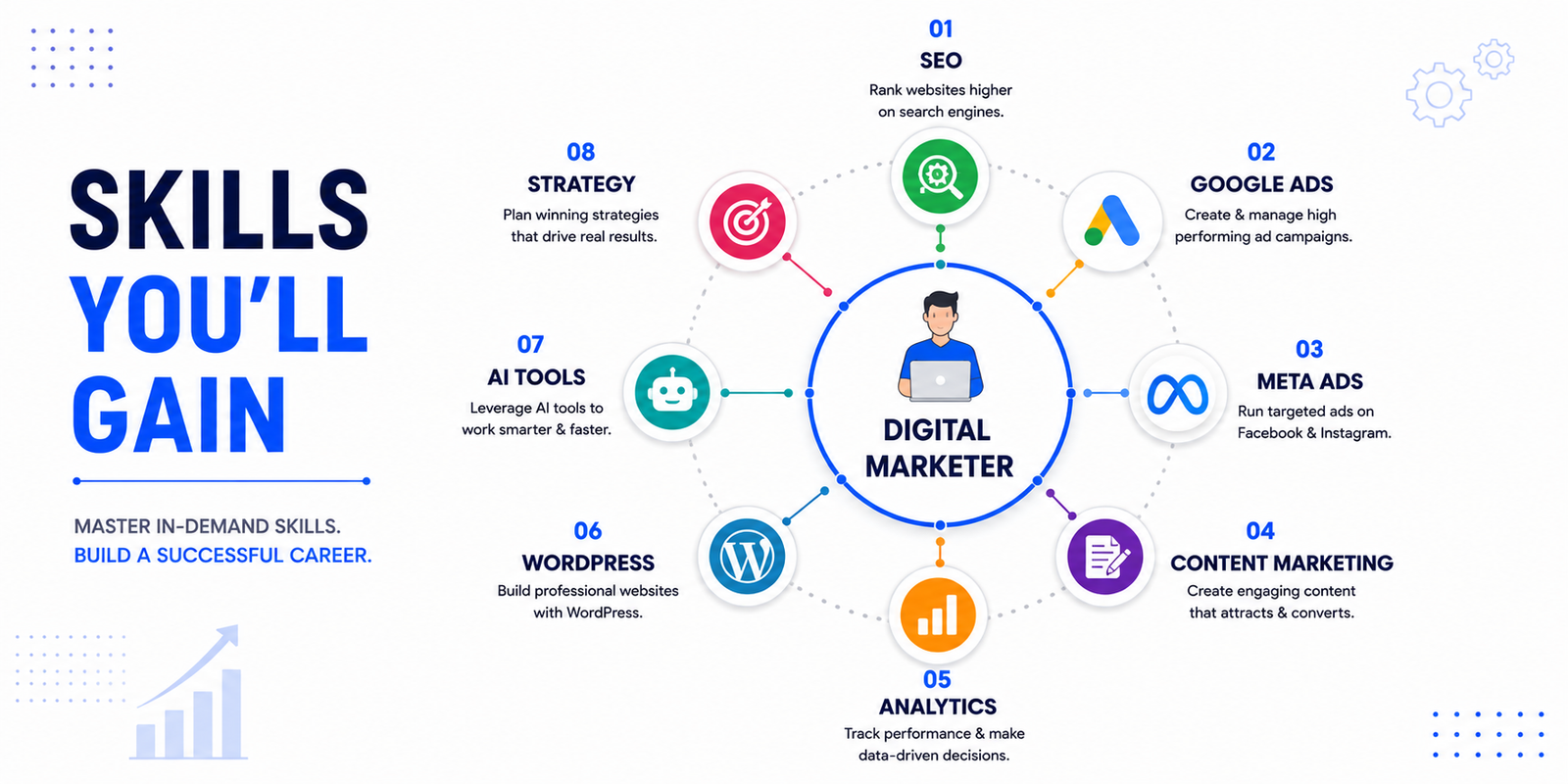
What Skills Will You Gain After Completing This Digital Marketing Course Syllabus?
Search Engine Optimization (SEO)
Learn how search engines discover, understand and rank web pages. Know how to improve website visibility by researching keywords, optimising content, fixing technical issues and building logical site architecture.
Paid Advertising
Build high-converting campaigns, select target audiences, write effective ad copy, track conversion pixels, and optimize ROAS based on real campaign analytics.
Content Strategy
Identify user search intent, organize information clearly, create high-value content, and optimize pages so they effectively address user queries while boosting organic traffic.
Website Management
Gain practical experience managing WordPress sites, publishing optimized landing pages, updating site content, and improving UX without relying on web developers.
Data Analysis
Master Google Analytics 4 (GA4) and Search Console to analyze traffic sources, track user behavior paths, and make data-backed growth decisions instead of relying on assumptions.
Social Media Management
Understand platform-specific audience demographics. Plan content calendars, maintain brand consistency, boost organic engagement, and measure post performance.
AI-Assisted Marketing
Use generative AI tools responsibly to speed up market research, keyword discovery, copy generation, and workflow automation while keeping strategic human oversight intact.
Marketing Strategy
Understand how SEO, paid ads, social media, and email marketing work together to build multi-channel conversion funnels that generate leads and drive scalable business growth.
Skills Summary
Plan a digital marketing strategy for a business
Build and manage a WordPress website
Improve search engine visibility through SEO
Create and optimise Google Ads and Meta Ads
Write search-friendly content
Analyse website performance using GA4
Plan social media content calendars
Use AI tools to improve marketing productivity
Build a portfolio through practical projects
Work confidently on real client assignments
Expert Perspective
The digital marketing industry changes every year, but strong fundamentals remain valuable. Professionals who combine marketing knowledge, analytical thinking, communication skills and hands-on experience are generally better prepared for long-term career growth than those who only know how to use a few software tools.