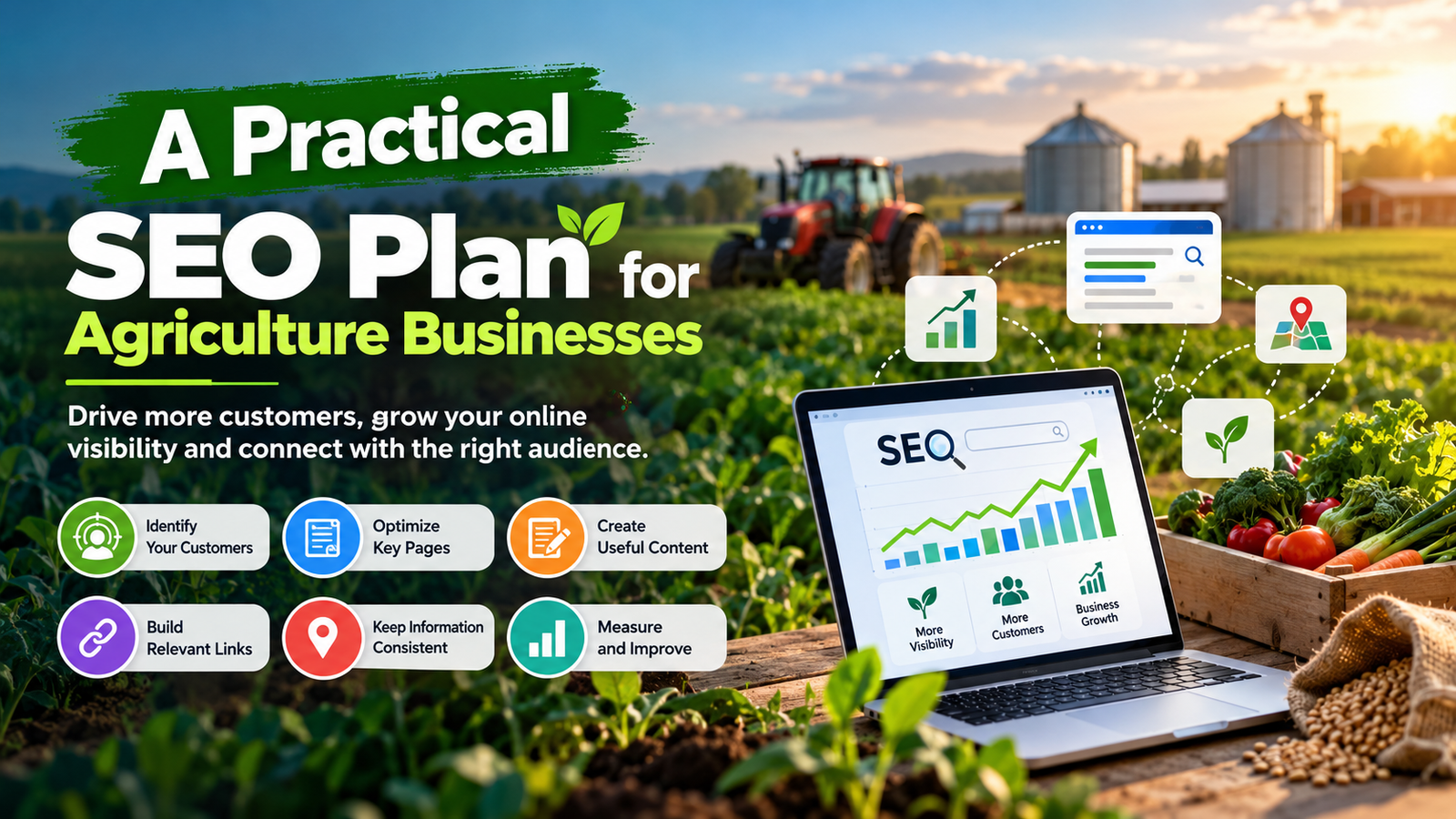
A Practical SEO Plan for Agriculture Businesses
A farm, greenhouse, seed supplier or agricultural consultant can have excellent products and still struggle to reach new customers online. A practical SEO plan helps people find the right information at the moment they are searching, whether they need a local supplier, crop advice or a reliable source of equipment. The strongest plans start with the business's real customers and grow through steady, useful improvements.
Start with the Customers You Want to Reach
Agriculture covers many markets, so begin by defining your audience. A small farm selling produce directly to households has different search needs from a company supplying irrigation systems to commercial growers. Write down the services or products you want to promote, the locations you serve and the questions customers ask before buying.
Use those details to identify search topics. A local farm might focus on seasonal produce, farm-gate opening times and delivery areas. A specialist supplier could create pages around particular tools, growing methods or crops. Choose phrases that match genuine customer needs rather than trying to attract every possible visitor. Search results are more useful when each page has a clear purpose.
Make Important Pages Easy to Understand
Review the pages that matter most to the business: product and service pages, location information, contact details and helpful guides. Each should explain what is offered, who it is for and what a visitor can do next. Use descriptive headings, concise page titles and readable copy. Include relevant details such as service areas, crop varieties, delivery arrangements or the conditions a product is designed for.
Agricultural information can be time-sensitive. Mark seasonal advice with dates, revisit it when recommendations change and remove details that are no longer accurate. Clear authorship and practical experience also help readers judge whether guidance is relevant to their operation. Where possible, use original photographs and explain what they show instead of relying on generic imagery.
Build Useful Content Around the Working Year
Plan content to reflect the agricultural calendar. Depending on the business, that might mean publishing planting guidance ahead of the season, explaining storage options after harvest or answering common questions about livestock care, soil preparation or machinery maintenance. A short, specific article that solves a real problem is more valuable than a broad post written only to include keywords.
Ask sales and customer-service staff which questions come up repeatedly. Turn those into guides, checklists or comparison pages, and link them to the relevant product or service pages on your own site. This gives visitors a useful next step and helps search engines understand how the information relates to the business.
Earn Relevant Links Through Relationships
Links from other websites can help people discover a business and provide context about its expertise. In agriculture, relevant opportunities may come from local food networks, trade associations, community initiatives, agricultural events or educational partnerships. Offer something worth sharing, such as a practical resource, a well-documented project or expert input for a publication. Avoid mass emails and schemes that promise large numbers of links without regard to relevance.
Consistency matters more than a sudden burst of activity. A structured 90-day link-building plan can help a team choose priority pages, research suitable publishers and track progress over time. Keep anchor text natural and varied, and focus on whether each link makes sense for the audience. A mention on a respected regional farming site may be more useful than many unrelated placements.
Keep Offline and Online Details Consistent
Many agricultural businesses meet customers at markets, field days, auctions and trade events. Print materials can make it easier for people to remember the business and find its website later. Check that names, phone numbers, addresses and web details match the information on the site.
For a card intended for international customers or printers, consult a business card setup in InDesign guide to check dimensions, bleed and safe areas before preparing artwork. Osdire is one place businesses can use to find freelance design help when a project needs specialist production skills.
Measure Progress and Adjust
Choose a small set of measures that reflect business goals. Track organic visits to priority pages, enquiries or orders from search, and visibility for a shortlist of relevant searches. Compare results over time rather than reacting to daily changes. If a page is receiving impressions but few visits, improve its title and description. If visitors arrive but do not take action, review whether the page answers their questions and makes the next step clear.
Set a regular review, perhaps once a month, to note what was published, which relationships produced relevant mentions and where visitors dropped off. Then choose the next manageable improvements. A successful SEO plan for an agricultural business is not a one-time checklist: it is a disciplined way to keep accurate information, useful resources and customer needs connected as the seasons and business priorities change.